
WordPress Website Development for Interior Design Studios Client: Creative Tonic Design | Houston, TX
Project Role
WordPress Website Development for Interior Design Studios
- Interior Design Firm Website Development
- Custom WordPress Build
- Project Portfolio Architecture
- Press & Editorial Integration
- Lead Generation & Consultation Pages
Creative Tonic Design is one of Houston’s most nationally recognized interior design studios — a full-service firm founded in 2006 by Courtnay Tartt Elias, whose work has appeared in Architectural Digest, House Beautiful, Veranda, and Homes & Gardens, and whose 2024 Kips Bay Dallas show house drew national attention. Led by a founder trained in 19th and 20th-century decorative arts at Sotheby’s in London, the studio is known for bold color, layered pattern, and an unapologetic maximalist sensibility. Creative Tonic serves clients nationwide from its Houston base, with a team of designers operating across full-home renovation, architectural consulting, and comprehensive interior installation.
Chainlink handled WordPress development for the redesigned creativetonicdesign.com, building out the site to visual specifications provided by Neiter Creative, a Houston-based branding and design studio with a longstanding relationship with the firm. Chainlink’s scope covered the full custom WordPress build: a structured project portfolio system using a custom post type, a press and editorial archive for managing Courtnay’s extensive national media placements, a paid Design + Lifestyle Consultation booking page, a project inquiry flow, and a newsletter integration — all developed to perform cleanly across desktop and mobile without compromising the rich, image-forward layouts Neiter Creative designed.
The resulting site functions as a credentialing platform as much as a portfolio — designed to convert high-net-worth homeowners who arrive via editorial referrals, Instagram, or direct search into qualified inquiry leads. With a gallery of named interior design projects, a robust press archive, and a low-friction consultation purchase path, the site supports Creative Tonic’s two primary revenue channels: project-based design engagements and direct-access homeowner consultations. For a studio whose business depends on first impressions, the new site matches the editorial quality of the publications that regularly feature their work.

Challenge & Solution
The Challenge


The Solution
Interior Design Firm WordPress Architecture
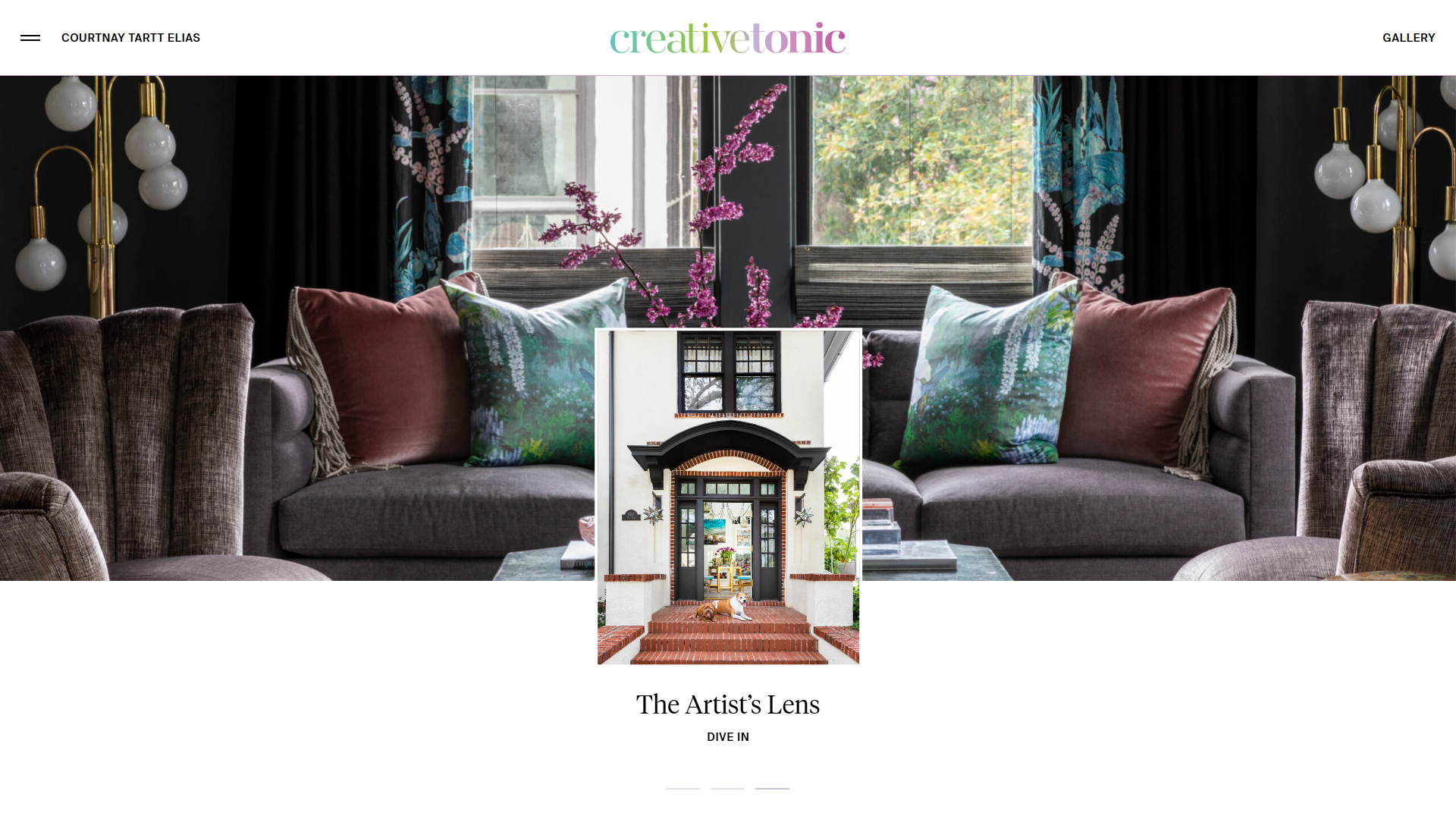
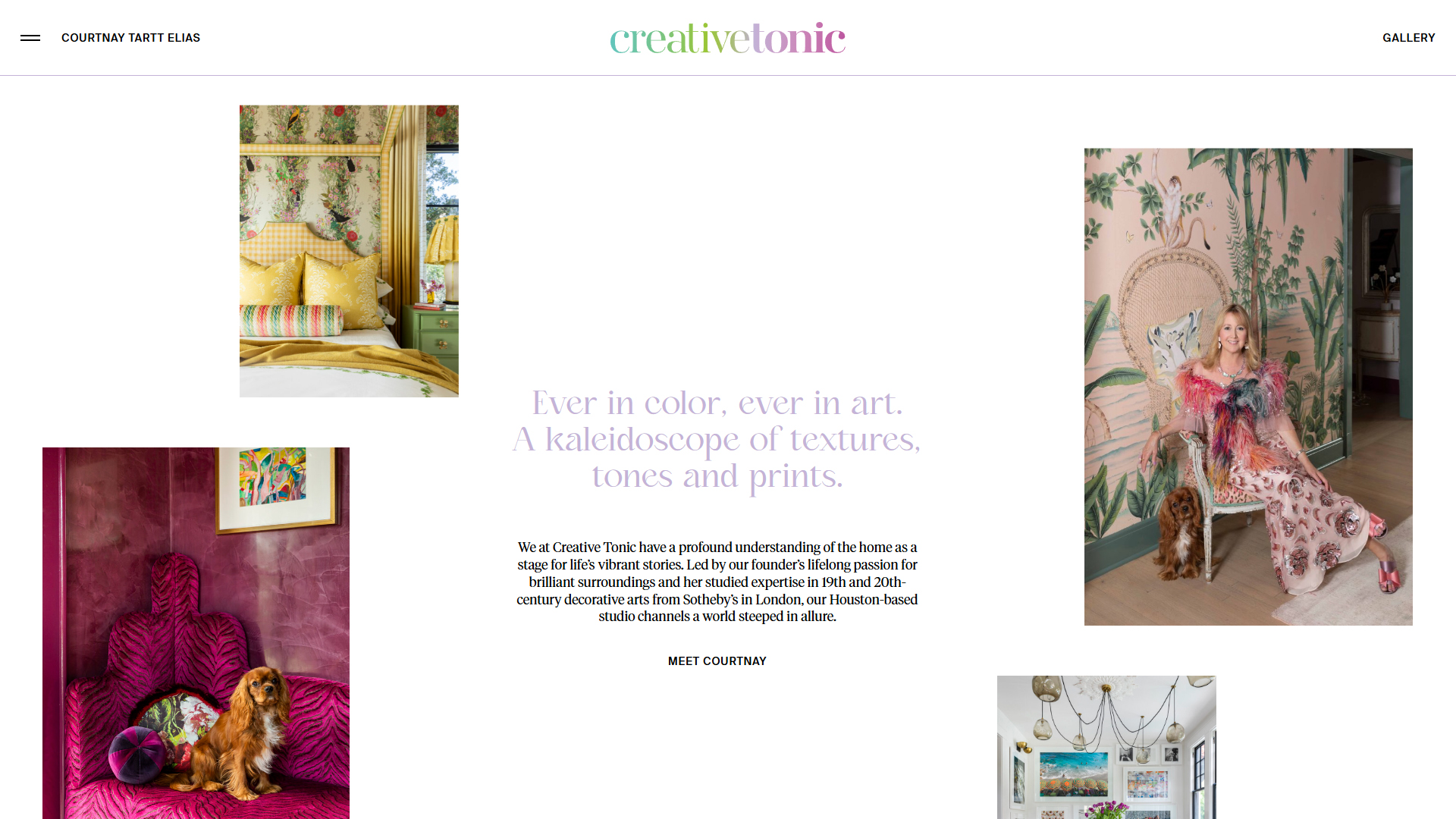
Chainlink built a fully custom WordPress site for Creative Tonic Design, developing page templates, navigation logic, and content systems to match Neiter Creative’s design specifications precisely. The build required careful attention to image-heavy layouts — balancing full-bleed photography, animated homepage sequences, and multi-column project grids without sacrificing load performance. WP Rocket caching and Yoast SEO were configured throughout, establishing a technical foundation appropriate for a studio whose site receives traffic from major national shelter publications.
Custom Project Portfolio & Gallery System
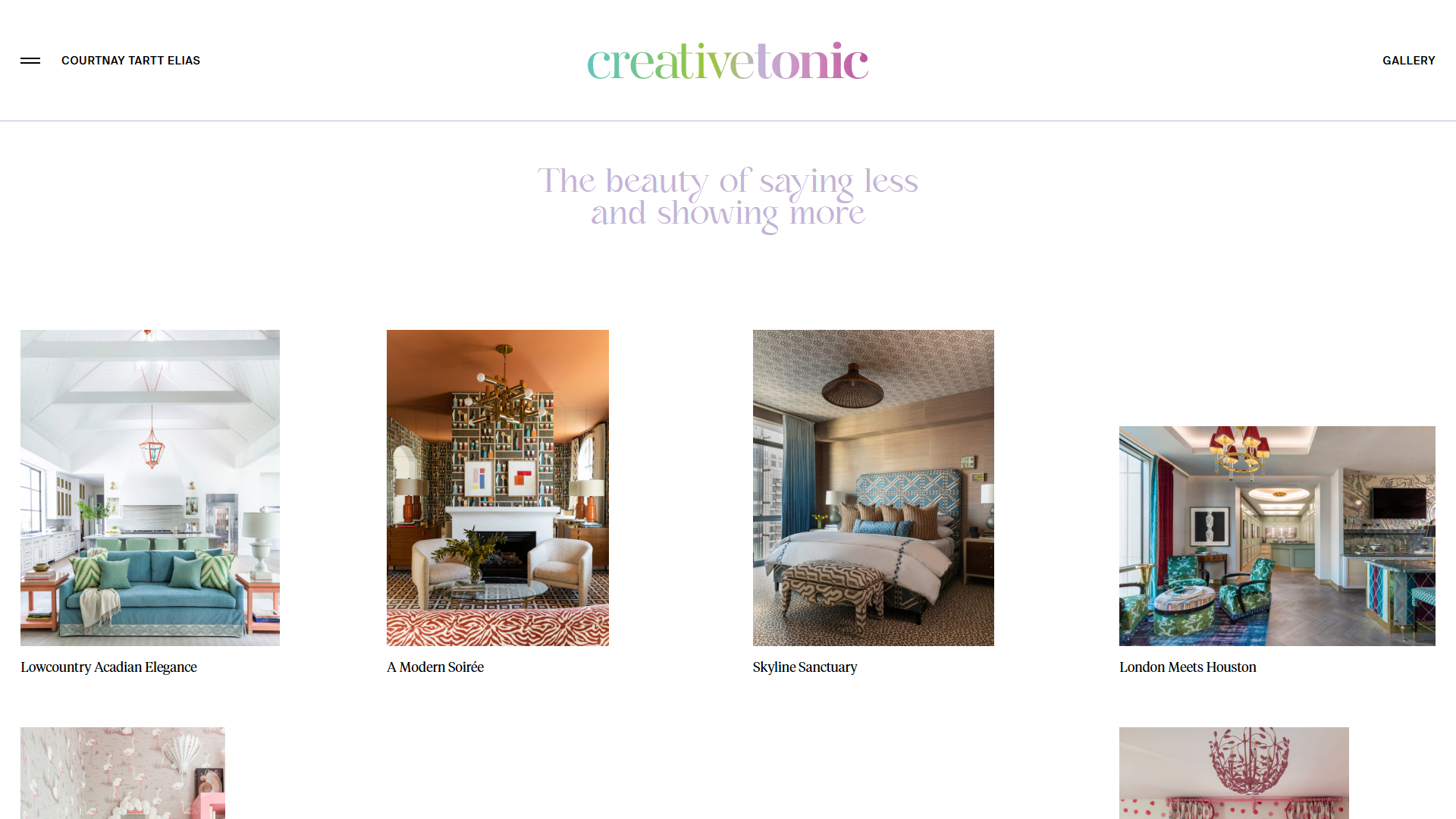
A custom post type architecture powers Creative Tonic’s project portfolio, allowing each interior design project to be published as a standalone, named entry — from “Lowcountry Acadian Elegance” to “Cactus Compound” — with dedicated image galleries and project-level metadata. The gallery index page surfaces all projects in a filterable visual grid, giving prospective clients an immediately browsable body of work. This structure also supports SEO indexing of individual project pages, helping each named project capture long-tail search traffic independently.
Press Archive & Editorial Integration
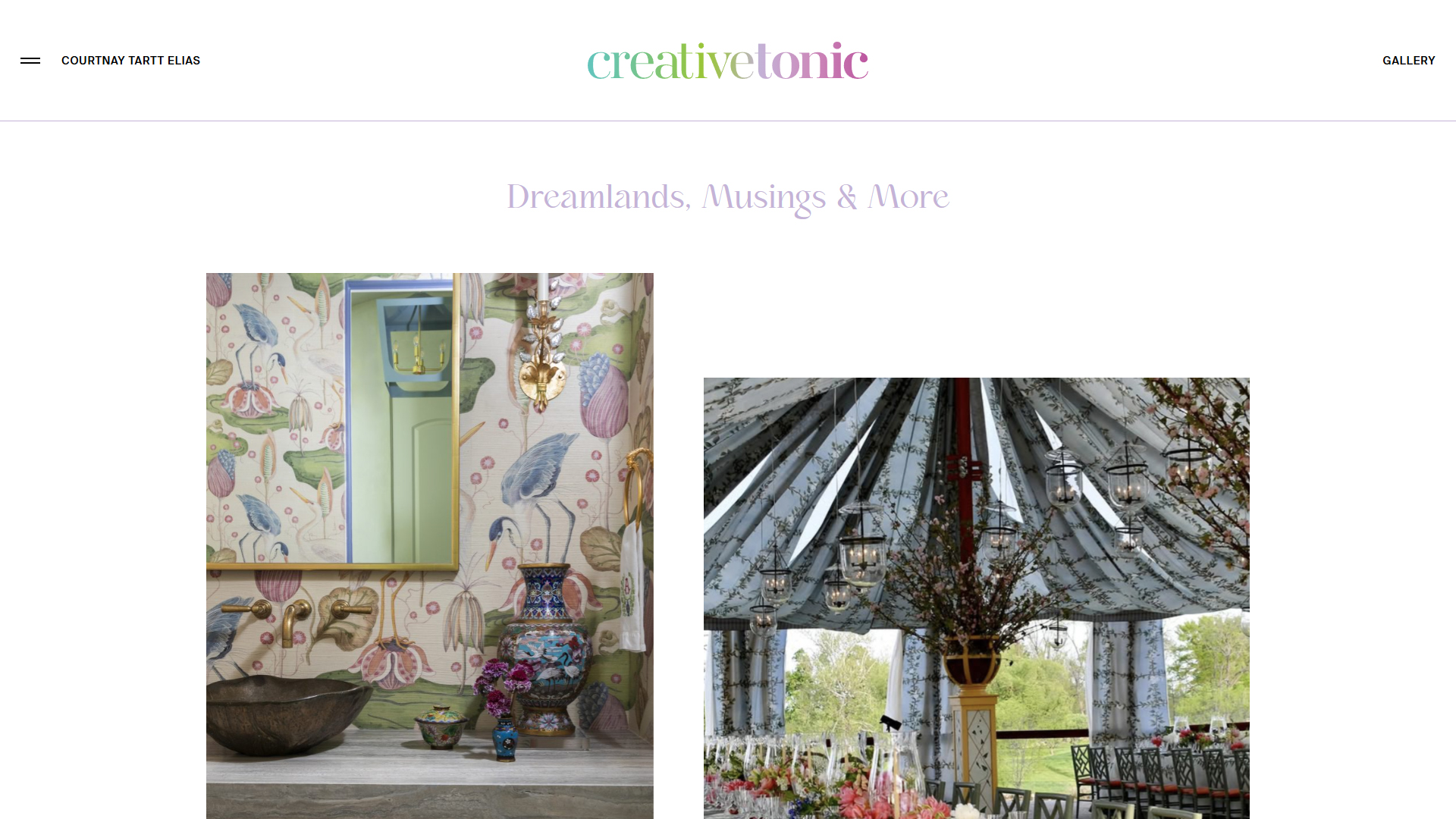
Creative Tonic’s Latest Articles section functions as a living press archive — cataloguing national placements in Architectural Digest, House Beautiful, Veranda, Homes & Gardens, and dozens of others. Chainlink built the post and taxonomy structure to support ongoing editorial additions without developer involvement, giving the studio’s team full autonomy to update the section as new placements land. For a firm that leverages media credibility as a primary new-business signal, a well-organized and easily maintained press page is a material business asset.
Client Inquiry & Consultation Lead Generation
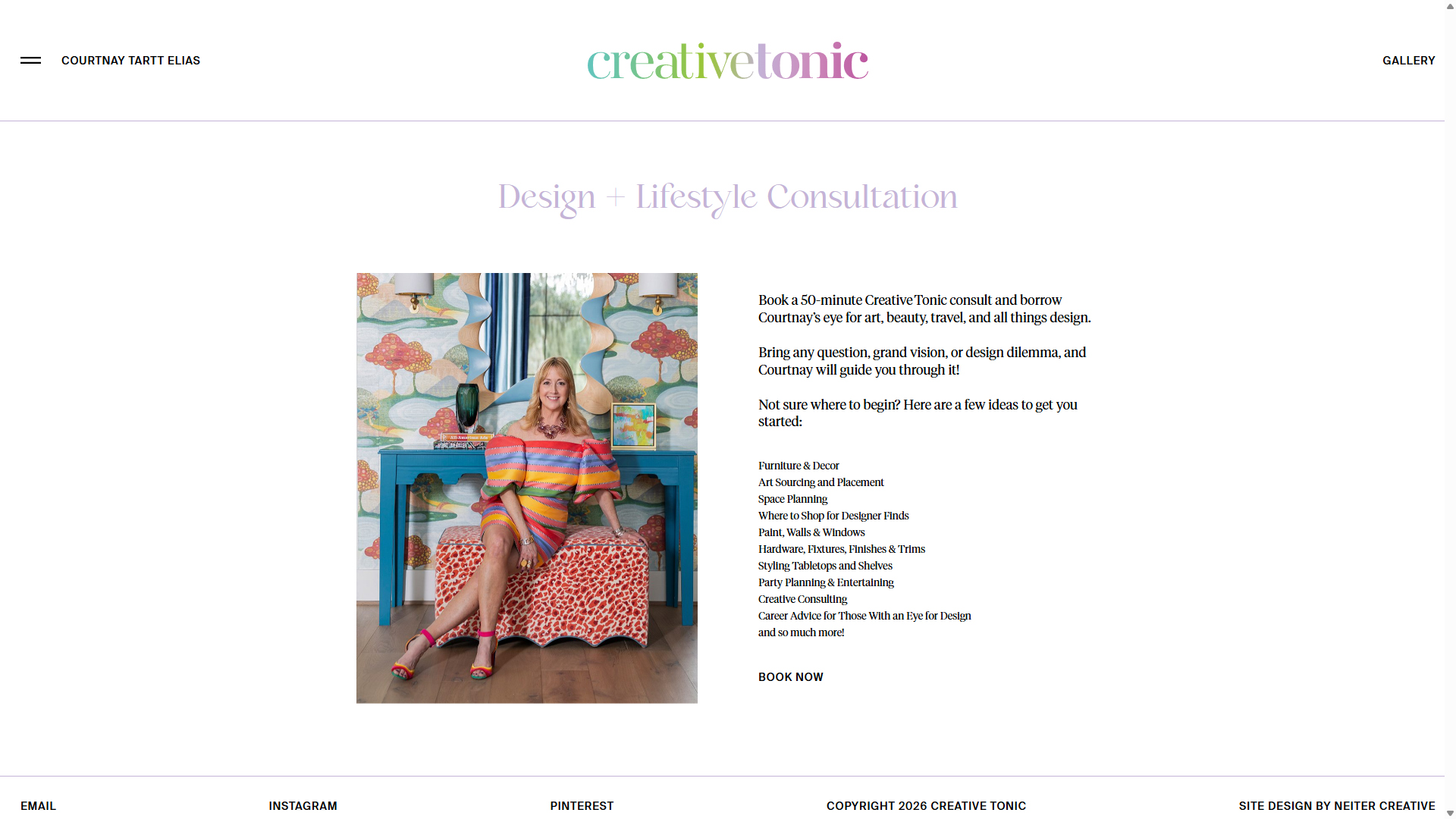
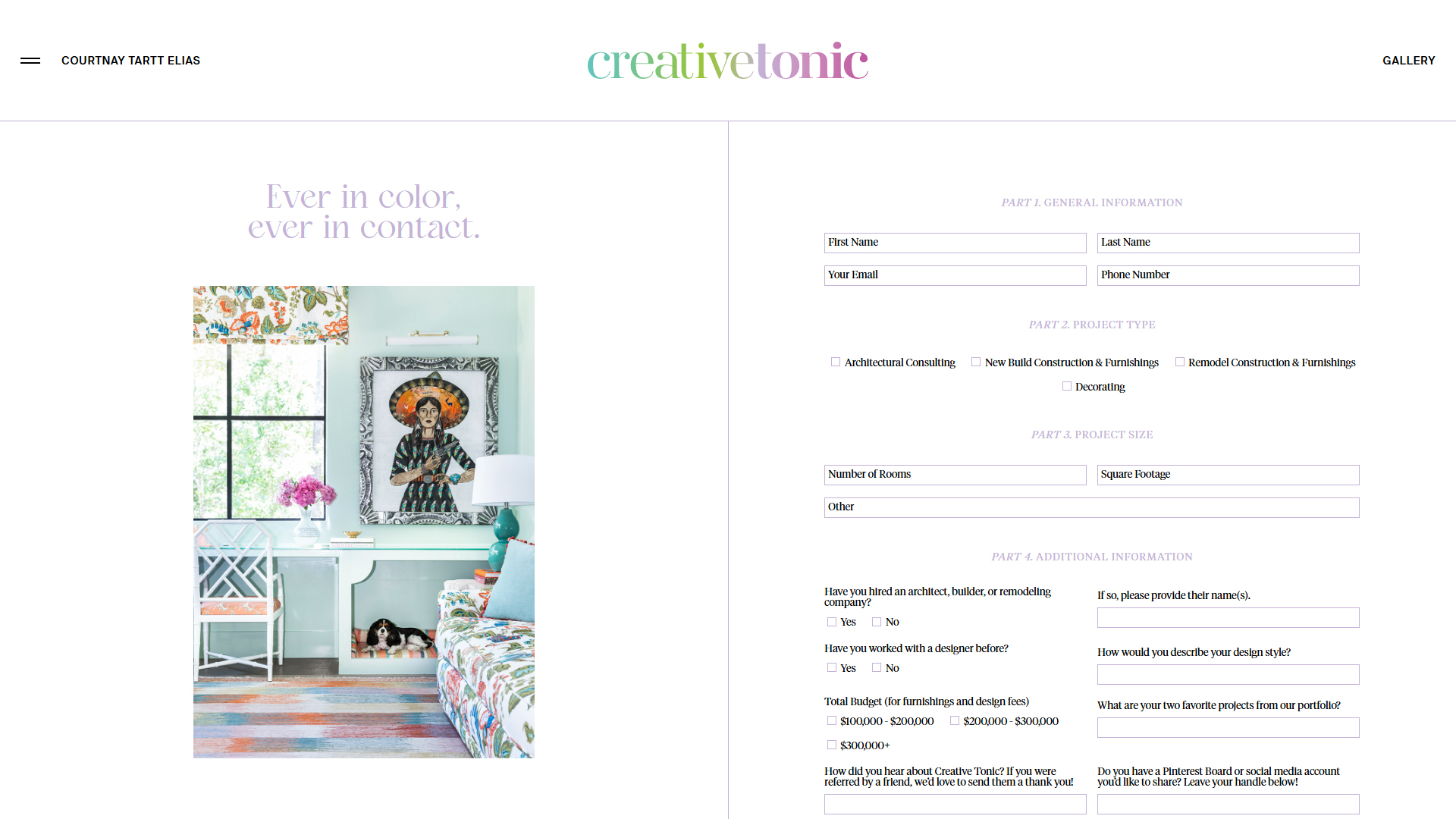
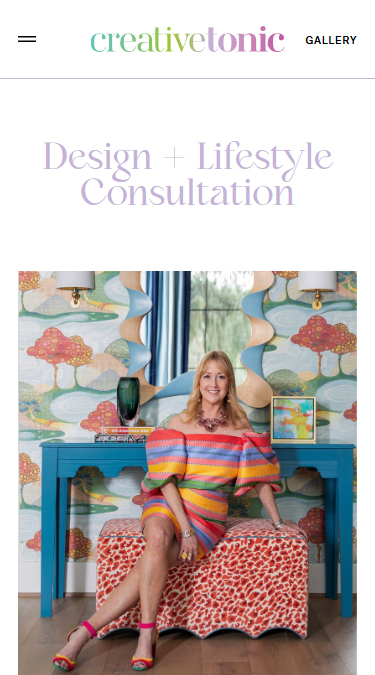
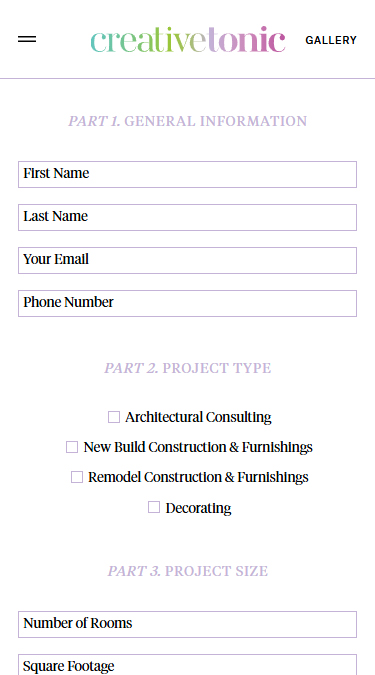
Two distinct client intake paths were built into the site: a Project Inquiry form targeting full-service design clients, and a paid Design + Lifestyle Consultation page for homeowners not ready for a full project commitment. The consultation page functions as a standalone conversion landing page with a clear value proposition and mobile-optimized booking flow. Together, the two paths allow Creative Tonic to qualify leads across different buyer stages without routing all traffic to a single generic contact form.
Interior Design Firm Website Development: Common Questions
An effective interior design firm website needs a well-organized project portfolio, a clear services or inquiry path, a press or media section that establishes credibility, and mobile-optimized image presentation. For nationally published studios, the site also needs to perform technically — fast load times, proper SEO structure, and clean indexing of individual project pages — because significant traffic arrives from editorial referrals. Creative Tonic Design’s site was built to address all of these: structured portfolio, press archive, and two distinct lead-capture paths for different client types.
WordPress is the most common CMS for interior design studio websites because it supports custom post types for portfolio management, integrates easily with photography-heavy layouts, and gives non-technical staff full control over content updates. It also scales well — a single CMS installation can power a project portfolio, a press archive, a blog, and multiple lead-generation pages simultaneously. For Creative Tonic Design, WordPress allowed Chainlink to build a named project portfolio system, a press section, and a paid consultation page, all within a single manageable environment.
The standard approach is a custom post type in WordPress, where each interior design project is treated as its own content entry with a title, image gallery, and any relevant metadata. This structure allows projects to be individually indexed by search engines, browsed as a collection on a gallery index page, and updated by studio staff without touching any code. Projects like the ones featured on creativetonicdesign.com — each with a distinct named identity and its own dedicated page — benefit directly from this architecture, as each project can rank independently for relevant searches.
For high-end interior design studios, a single generic contact form typically isn’t enough. The most effective intake systems distinguish between client types — separating full-service project inquiries from lower-commitment touchpoints like consultations or discovery calls — so the studio can qualify leads before investing time in a response. Chainlink built Creative Tonic Design’s site with exactly this structure: a Project Inquiry form for prospective full-service clients and a separate paid Design + Lifestyle Consultation page for homeowners in an earlier stage of the decision process. Contact Chainlink to discuss a lead generation structure tailored to your firm’s client pipeline.
Interior design firm website development typically ranges from $15,000 to $35,000 or more, depending on scope. A basic portfolio site with a contact form sits at the lower end; a fully custom WordPress build with a structured project portfolio system, press archive, multiple lead-generation pages, and SEO configuration sits substantially higher. Ongoing maintenance, hosting, and content updates are typically billed separately. The investment tends to be justified quickly for established studios — a well-built site that converts even one additional client referral per quarter can pay for itself within a year.
Instagram integration on WordPress is typically handled through a dedicated plugin — common options include Smash Balloon or similar tools — which authenticate against the Instagram API and pull recent posts into a defined display area on the site. For visually driven studios like Creative Tonic Design, where Instagram is a primary content channel, embedding the feed directly on the homepage keeps the site’s imagery current without requiring manual uploads. The integration also reinforces the connection between the studio’s social presence and its website, giving visitors multiple ways to explore the body of work in a single session.