
Executive Summary
Search visibility is no longer defined solely by rankings and blue links. As search engines and platforms increasingly rely on artificial intelligence to interpret intent, summarize answers, and personalize results, brands must evolve beyond traditional SEO.
This article explains the shift from SEO (Search Engine Optimization) to AIO (Artificial Intelligence Optimization), outlines how related disciplines like AEO and GEO fit into modern strategies, and shows how forward-thinking brands are adapting. If your business relies on organic visibility for growth, understanding — and integrating — SEO and AIO is no longer optional.
SEO vs AIO: How Search Visibility Is Changing – and What Smart Brands Are Doing About It
Search visibility is evolving rapidly. The digital landscape is shifting, and brands must adapt.
SEO, or Search Engine Optimization, has long been the cornerstone of online visibility. It focuses on optimizing content to rank higher in search results.
But now, a new player is emerging: AIO, or Artificial Intelligence Optimization. AIO leverages AI technologies to enhance search visibility and user experience.
The shift from traditional SEO to AIO is driven by advancements in AI and machine learning. These technologies are transforming how brands approach search visibility.
Smart brands are integrating AI tools to analyze data and predict search trends. This allows them to stay ahead of the competition.
SEO strategies are evolving to include voice search and natural language processing. These elements are crucial for reaching modern audiences.
AIO can provide more personalized search results, improving user engagement. This personalization is key to capturing and retaining audience attention.
Brands are using AI to automate repetitive SEO tasks. This frees up resources for strategic planning and innovation.
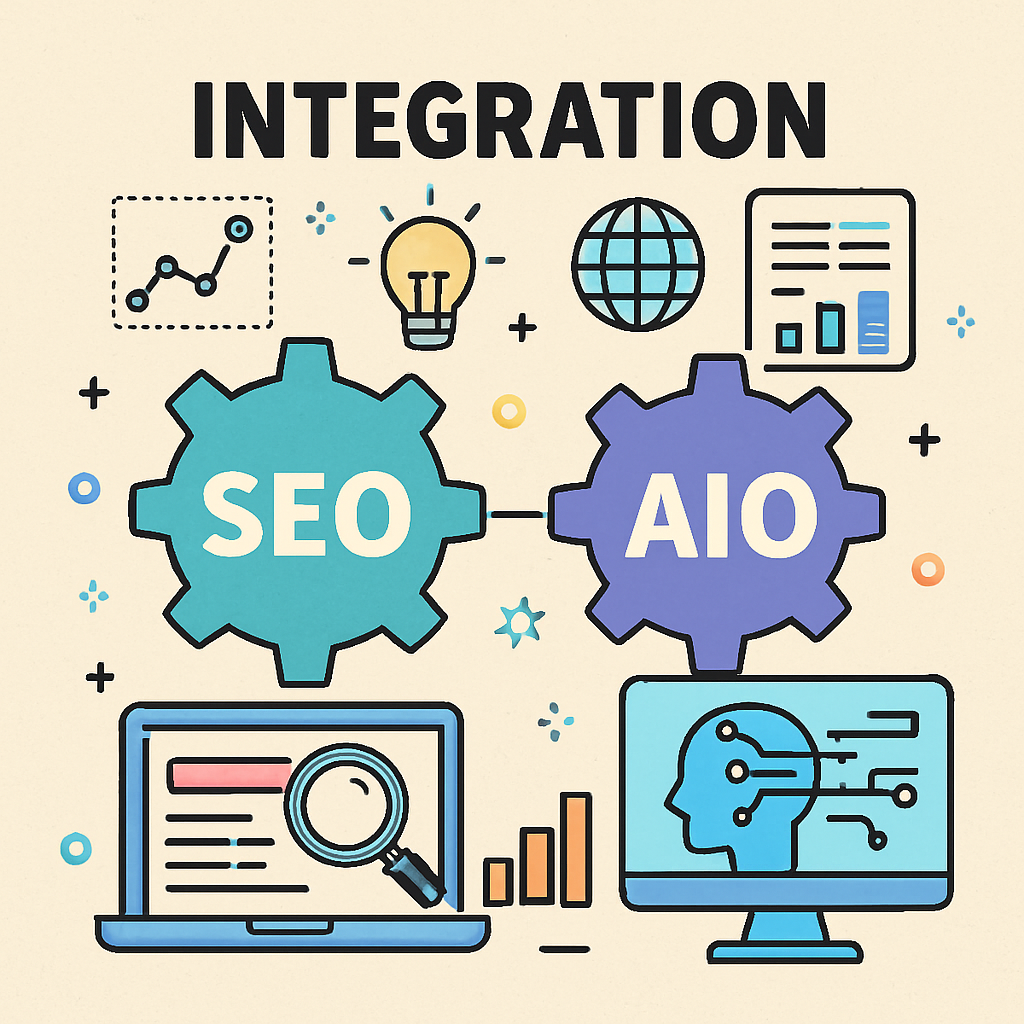
The competition between SEO and AIO is not about replacement but integration. Together, they can deliver better results.
Understanding user intent is crucial for both SEO and AIO strategies. It helps brands create content that truly resonates.
In this article, we explore how search visibility is changing. We’ll also look at what smart brands are doing to adapt.
Request a free SEO + AIO visibility audit
Table of Contents
- Understanding the Evolution: SEO, AEO, GEO, and AIO Explained
- The Shift from SEO to AIO: Why Search Visibility Is Changing
- SEO vs AIO: Key Differences and Overlaps
- The Role of AEO and GEO in Modern Search Strategies
- How AI Is Transforming Search: The Rise of Artificial Intelligence Optimization
- What Smart Brands Are Doing: Real-World Examples and Case Studies
- Building a Future-Proof Search Strategy: Integrating SEO and AIO
- Essential SEO and AIO Tools for Modern Marketers
- Actionable SEO and AIO Strategies for 2026 and Beyond
- Overcoming Challenges: Data Privacy, AI Ethics, and Algorithm Changes
- The Future of Search Visibility: Predictions and Trends
- Conclusion: Embracing Change and Staying Ahead
- FAQs: SEO vs AIO, AEO, and the Future of Search
Understanding the Evolution: SEO, AEO, GEO, and AIO Explained
SEO has been the backbone of digital marketing for years. It involves optimizing websites for better search engine rankings. Over time, SEO has evolved to meet new challenges and technologies.
In recent years, new branches of optimization have emerged. AEO, or Answer Engine Optimization, is one of them. AEO focuses on providing direct answers within search engine results, enhancing user experience.
GEO, or Geographic Optimization, is another important variant. GEO emphasizes optimizing content for local searches and geo-specific results. It is especially vital for businesses with physical locations.
These three areas—SEO, AEO, and GEO—work together to improve search visibility. Each plays a specific role in connecting brands with their audiences.
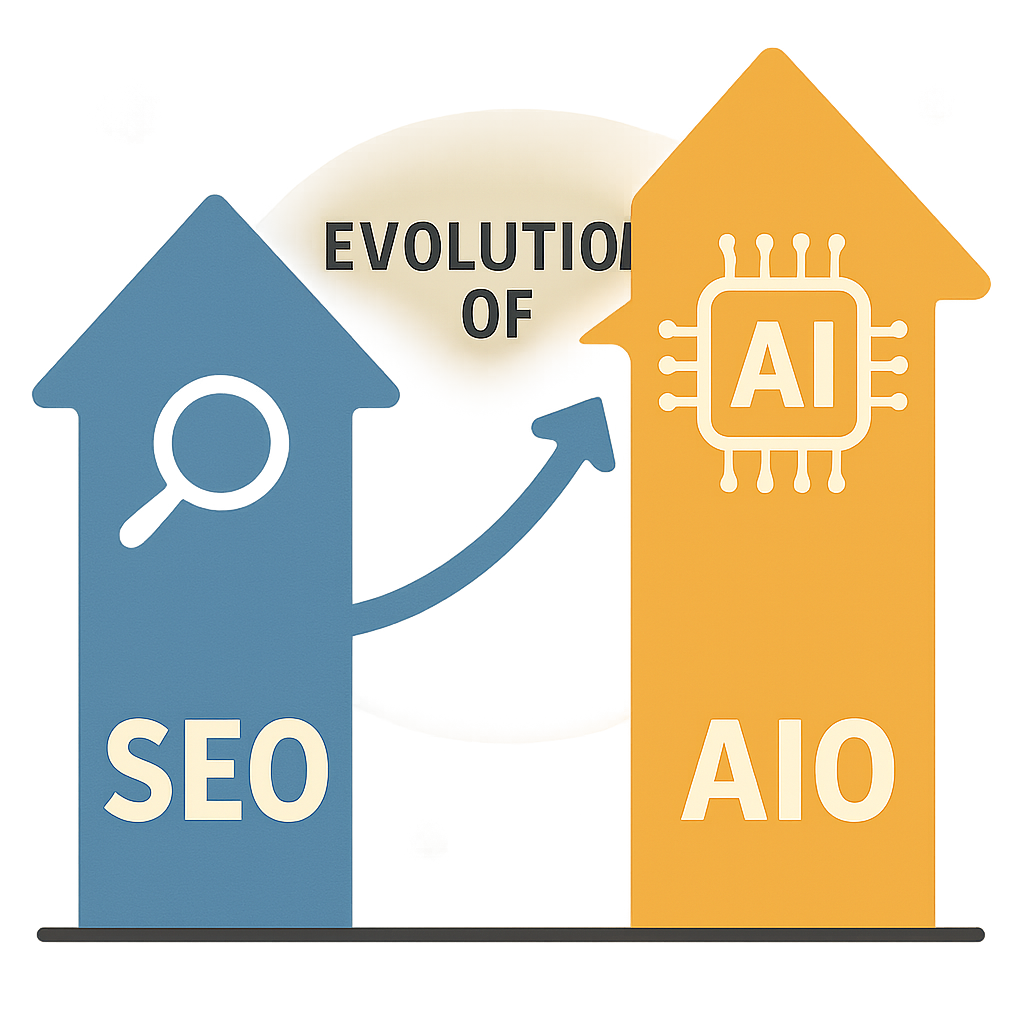
Now, AIO is gaining traction, adding another layer to this landscape. AIO incorporates AI to further refine search strategies.
To understand this evolving landscape, consider these points:
- SEO: Optimizes content for traditional search engines.
- AEO: Focuses on appearing in direct answer boxes, like Google’s Featured Snippets.
- GEO: Ensures visibility in local searches and maps.
- AIO: Utilizes AI tools to predict trends and personalize search results.
Brands must know when to apply each approach. The synergy between these strategies can amplify a brand’s online presence.
AIO stands out by using AI technologies for deeper data analysis. This allows brands to anticipate changes in search behavior and algorithms.
As search engines become smarter, AIO offers a path to stay ahead. It integrates seamlessly with SEO and other optimization techniques.
In this evolving world, blending human creativity with AI’s analytical power is key. Brands adept at this balance will lead the charge in search visibility.
The Shift from SEO to AIO: Why Search Visibility Is Changing
The landscape of search visibility is evolving rapidly. Traditional SEO remains important, but AI-driven methods are gaining ground. This shift from SEO to AIO is driven by new technologies and user expectations.
AI and machine learning are transforming how search engines operate. They enable more dynamic and intuitive search experiences. These advancements have created a need for AIO—Artificial Intelligence Optimization.
Search engines now consider more than just keywords and backlinks. They assess user behavior and preferences, providing more accurate results. This data-driven approach requires brands to adapt quickly.
AIO takes optimization to the next level. It uses AI to analyze patterns and predict user needs. As a result, search visibility strategies are becoming more personalized and targeted.
Several factors contribute to this shift from SEO to AIO:
- Advanced AI Tools: Enhance data analysis and user behavior predictions.
- Voice Search: Increases emphasis on natural language processing.
- Personalization: Delivers tailored search results to users.
- Mobile Usage: Encourages more sophisticated location-based search optimizations.
- Algorithm Changes: Demands greater adaptability from search strategies.
With the rise of voice assistants, the demand for natural conversations is growing. AI helps interpret these complex queries. By understanding context better, brands can improve their ranking prospects.
AIO also alleviates many traditional SEO burdens. It automates repetitive tasks, freeing up resources for more strategic initiatives. Brands leveraging AI can focus on creative content that engages users.
Adapting to this new landscape involves more than just following trends. It requires a proactive approach to integrate AI into existing strategies. Doing so will ensure brands remain visible in an increasingly competitive environment.
AI and SEO are not mutually exclusive. When integrated, they can enhance each other’s capabilities. Brands that master this integration will thrive.
Ultimately, this shift emphasizes understanding user intent. Successful strategies will prioritize serving users what they seek, anticipating their needs before they even search.
In conclusion, as AI continues to advance, the opportunities for search visibility are boundless. Brands that can harness these technologies will lead the charge in the digital landscape.
SEO vs AIO: Key Differences and Overlaps
Understanding SEO and AIO involves grasping both the differences and the common ground they share. At their core, both aim to enhance search visibility, but they approach this goal differently.
SEO, or Search Engine Optimization, has long been about optimizing for search engines. It focuses on elements like keywords, backlinks, and site structure. The primary aim is to improve rankings on search engine result pages (SERPs).
AIO, on the other hand, leverages AI to interpret user data and behavior. It goes beyond traditional metrics, using AI algorithms to make searches more personalized. This leads to a search experience that’s tailored to the individual user.
Despite their different methods, SEO and AIO overlap in several ways. Both rely heavily on data analysis to drive decisions. They focus on improving user experience and satisfaction, albeit through different means.
Here are some key differences and overlaps:
- Data Usage: SEO analyzes traditional metrics; AIO uses AI to understand behavioral patterns.
- User Experience: Both enhance user satisfaction, but AIO tailors results to individuals more effectively.
- Techniques: SEO involves manual optimizations; AIO uses automated, AI-driven processes.
AIO can provide more refined insights. It identifies patterns in user behavior that SEO might miss. This allows brands to target specific user needs and preferences.
However, SEO is far from obsolete. It still provides foundational techniques necessary for any digital strategy. Backlinks, for example, remain a crucial component of domain authority.
The best strategy involves integrating SEO and AIO effectively. This synergy capitalizes on the strengths of each. Brands that succeed in this integration see improved visibility and engagement.
Another area of overlap is the focus on mobile optimization. Both SEO and AIO understand the importance of catering to mobile users. They optimize content accordingly to maximize reach and engagement.
The rise of voice search has impacted both fields. SEO strategies now include natural language processing. Similarly, AIO uses machine learning to interpret and respond to voice queries more naturally.
Despite their differences, both SEO and AIO aim to meet searchers’ needs. Adapting to the evolving algorithms demands innovative strategies from both methods.
Brands that leverage the unique strengths of each can enhance their search visibility exponentially. The key is not to choose one over the other, but to use them in harmony.
In conclusion, while SEO and AIO have distinct features, their combination is powerful. Brands that can harness both approaches will find themselves at the forefront of the digital landscape.
Schedule a search visibility strategy session
The Role of AEO and GEO in Modern Search Strategies
In the evolving digital landscape, AEO and GEO play pivotal roles. Answer Engine Optimization (AEO) targets direct answers. This adaptation is crucial as users seek quick information.
AEO focuses on delivering concise answers in search results. It aims to provide users with immediate solutions without needing further clicks. This aligns with the rising trend of voice-assisted queries and smart devices, which demand rapid responses.
Geo-targeting, or GEO, enhances local search strategies. It is indispensable for businesses with location-based services. GEO ensures visibility to the right audience, boosting foot traffic and local engagement.
AEO and GEO, though distinct, share a common objective. They prioritize user convenience and streamlined search experiences. This involves optimizing content not only for keywords but also for context and location relevance.
These strategies bring several benefits:
- Increased Local Visibility: GEO improves reach within specific geographic regions, essential for small businesses.
- User-Centric Approach: AEO focuses on what users are asking and delivers precise answers.
- Higher Engagement: Content meets user intent, leading to greater satisfaction and interaction.
- Competitive Advantage: Early adopters of AEO and GEO gain a strategic edge in crowded markets.
AEO requires rich, well-structured content. Using schema markup can enhance search engine understanding of the content, improving answer delivery. Meanwhile, GEO utilizes local keywords and directories to rank in local searches.
Smart brands are adapting by leveraging both strategies. They enhance their online presence by focusing on local and answer-based content optimization. This dual focus can drive both organic reach and hyperlocal visibility.
In a world where instant satisfaction is a necessity, AEO and GEO are not merely add-ons. They are integral components of comprehensive search strategies. These methods reflect the importance of meeting users where they are and providing relevant, impactful content.
Brands that embrace both AEO and GEO effectively cater to diverse user needs. As technology advances, these strategies will continue to evolve, offering even more precise targeting.
How AI Is Transforming Search: The Rise of Artificial Intelligence Optimization
The advent of Artificial Intelligence Optimization (AIO) is reshaping search dynamics. AI’s ability to process and interpret data surpasses traditional methods. It offers innovative ways to enhance search visibility and user engagement.
AI algorithms predict user intent. These predictions lead to more personalized search results. Personalization is key in retaining and attracting users, as it enhances relevance.
AIO tools analyze enormous datasets with precision. These insights guide more effective search strategies. Brands rely on these tools to remain competitive and adaptive to changes.
This reliance signifies a shift from conventional SEO approaches. AIO incorporates machine learning to refine targeting strategies continually. It transforms how content is indexed and ranked on search engines.
Several AI technologies are propelling this shift:
- Natural Language Processing (NLP): Enhances understanding of user queries and voice search.
- Predictive Analytics: Anticipates trends and user behavior changes.
- AI-Driven Content Creation: Automates and refines content development for SEO.
Real-time analytics from AI inform content strategies. These insights assist in optimizing for current trends and algorithm shifts. Thus, brands are more agile and responsive to market demands.
AIO’s transformation is not confined to tech giants. Small to mid-sized businesses leverage AI for cost-effective solutions. They implement AIO in diverse ways to enhance digital presence.
AIO also supports ethical and data-compliant practices. It ensures that personalization respects privacy standards. This balance between innovation and ethics is critical in digital marketing.
As AI continues to evolve, so will search strategies. The marriage of creativity and machine learning defines future success. Smart brands are those who merge insights with human ingenuity.
In this digital age, integrating AIO is not an option but a necessity. It promises enhanced user experiences and optimized search results.
What Smart Brands Are Doing: Real-World Examples and Case Studies
As search visibility evolves, innovative brands are leading the change. They are not merely following trends but setting them. Here, we’ll explore how they adapt and thrive using SEO and AIO techniques.
Take Netflix, for example. They use AI to personalize content recommendations. This engagement model enhances user experience and keeps viewers active on their platform.
Amazon, too, champions AIO innovations. Its algorithm analyzes purchasing patterns, recommending products with uncanny precision. Such personalization boosts sales and user satisfaction.
Another example is Spotify, which employs machine learning. By studying user behavior, it offers curated playlists. This personal touch increases listener retention and loyalty.
In the retail sector, Zara integrates AI for inventory management. This automation ensures products are available when and where needed. Consequently, it streamlines operations and elevates customer service levels.
Several strategies define these successes:
- Utilizing Predictive Analytics: Anticipating consumer needs enhances service delivery.
- Leveraging AI in Content Curation: Tailored experiences keep users engaged.
- Emphasizing Mobile Optimization: Ensuring accessibility boosts search visibility.
- Incorporating Voice Search Capabilities: Adapting to emerging tech trends.
Conversely, brands like Walmart have optimized logistics using AI. Their system improves delivery timeliness and efficiency. Thus, operational costs reduce while customer satisfaction grows.
Airbnb employs AI to match guests with suitable accommodations. By analyzing preferences, their system ensures more accurate suggestions. This application improves guest experiences and host satisfaction.
Google’s AI initiatives also deserve mention. They’ve pioneered advancements in voice recognition and search algorithms. Their continued investment transforms the search landscape.
Brands in the hospitality industry are harnessing AI-driven customer insights. Marriott, for instance, enhances guest experiences through tailored offerings. Their model is a testament to the power of AIO in hospitality.
For many businesses, the transition to AI is gradual. They realize AI’s potential to refine marketing strategies and improve targeting. AIO helps address specific user needs, fostering loyalty and growth.
Building a Future-Proof Search Strategy: Integrating SEO and AIO
Creating a robust search strategy is essential for modern businesses. Integrating SEO with AIO ensures companies stay competitive. As AI technologies advance, they reshape marketing practices.
SEO focuses on optimizing content for search engines. Traditional methods emphasize keywords and backlinks. But, with AI, strategies have expanded to include data-driven insights.
To build a future-proof plan, brands should embrace both approaches. A blended strategy leverages the strengths of each. This integration achieves better search visibility and engagement.
Consider implementing AI tools alongside traditional SEO techniques. These tools can identify trends and predict consumer behavior. This ability enhances decision-making processes.
Focus on understanding user intent. Tailor content to address specific needs and preferences. This approach improves relevance and retains user interest.
Incorporating voice search optimization can’t be overlooked. As voice recognition technology improves, it influences search algorithms. Preparing content for voice queries expands reach.
Prioritize personalizing user experiences. AI can analyze data to create targeted marketing campaigns. This personalization deepens customer relationships and fosters loyalty.
Mobile optimization remains vital. With increasing mobile usage, ensuring responsiveness is critical. A seamless mobile experience enhances user satisfaction and search rankings.
Geo-targeting should also be part of your strategy. Localized content captures location-based searches. Thus, brands can connect more effectively with nearby consumers.
A future-proof strategy considers:
- AI Tools for Trend Analysis: Use AI to spot patterns and adjust tactics.
- Voice Search Integration: Optimize for queries spoken aloud.
- Mobile-Friendly Content: Ensure accessibility on mobile devices.
- Personalized User Experiences: Craft strategies that feel customized.
- Localized SEO: Target communities with specific local insights.
A solid blend of SEO and AIO requires continuous learning. Stay informed about algorithm updates and AI advancements. Regular updates keep your strategy relevant and effective.
Training and upskilling teams in AI technologies is also crucial. This investment expands their capabilities and keeps them competitive. Future success hinges on understanding and adapting to evolving technological landscapes.
Ultimately, the synergy between AI and traditional methods holds immense potential. This combination enhances creativity and efficiency. Embracing this evolution leads to sustainable success in the digital era.
Essential SEO and AIO Tools for Modern Marketers
Modern marketers rely heavily on a variety of tools. These tools enhance efficiency and improve results. Both SEO and AIO tools are essential in the digital marketing landscape.
SEO tools focus on traditional optimization tasks. This includes keyword research and backlink analysis. Their role in understanding search engine algorithms remains pivotal.
AIO tools are increasingly becoming indispensable. They leverage AI to offer deeper insights and automation. These tools transform data into actionable intelligence.
The integration of AI in SEO tools brings many advantages. It allows for more precise analytics and trend prediction. This synergy is key for smarter marketing strategies.
Key Tools for SEO and AIO:
- Google Analytics: Provides insights into website traffic and user behavior.
- Ahrefs: Assists in backlink analysis and competitor research.
- SEMrush: Offers comprehensive SEO audit and keyword tracking.
- Moz: Focuses on domain authority and keyword optimization.
- ClearScope: Uses AI to suggest content improvements for SEO.
- MarketMuse: Employs AI for content strategy and topic modeling.
- BrightEdge: Blends AI with traditional SEO for comprehensive strategies.
- Botify: Combines data from web crawls, log files, and analytics for in-depth SEO insights.
Choosing the right tools depends on specific needs. Some marketers prioritize analytics, while others focus on automation. A balanced combination ensures comprehensive coverage.
Investing in tools that facilitate AI integration is wise. These tools can automate repetitive tasks. This frees up time for strategic activities and creative planning.
Marketers must also stay updated with tool advancements. Innovations in AI frequently change capabilities. Keeping abreast of these updates is crucial for staying competitive.
Understanding the unique features of each tool is vital. This knowledge enables marketers to harness their full potential. Proper utilization can significantly boost search visibility and engagement.
For those new to AIO tools, starting with user-friendly options is advisable. These simplify the transition and build foundational AI understanding. As proficiency grows, more complex tools can be adopted.
Ultimately, the right tools are game-changers in marketing strategies. They help businesses adapt to changing search landscapes. Using them effectively drives success in achieving digital objectives.
Actionable SEO and AIO Strategies for 2026 and Beyond
The digital landscape continues to evolve rapidly. Marketers must adapt strategies to stay ahead. Both SEO and AIO play critical roles in this dynamic environment.
- Prioritize Voice Search: As more users embrace voice-activated devices, optimizing for voice search becomes crucial. Incorporate natural language and conversational keywords.
- Focus on User Experience (UX): Page speed, mobile-friendliness, and intuitive design are vital. They improve user satisfaction and boost rankings.
- Leverage AI for Content Creation: Use AI tools to generate topic ideas and personalize content. This enhances relevancy and engagement.
- Enhance Visual Search Capabilities: Optimize images and videos for search engines. Visual content is gaining prominence and should not be ignored.
- Automate Repetitive Tasks: Utilize AI to handle tasks like data analysis and reporting. Automation saves time and allows focus on strategic initiatives.
- Embrace Hyper-Personalization: Tailor content to individual preferences and behaviors. AI can analyze data to predict and meet customer needs.
- Invest in Secure Websites: Data security builds trust with users. HTTPS and other security measures are essential.
- Monitor Algorithm Changes: Stay updated with search engine algorithm updates. Quickly adapting to changes maintains visibility.
- Utilize Advanced Keyword Research Tools: AI-driven tools identify emerging trends and gaps. This insight supports strategic keyword integration.
- Explore New Markets with GEO-Targeting: Use localization strategies to enter emerging markets. GEO-targeting ensures content reaches the right audience.
A successful strategy involves integrating both SEO and AIO elements. Combining traditional techniques with cutting-edge AI solutions offers significant advantages. This blend allows for more precise and adaptable approaches.
The future demands agility and foresight. Continuous learning and adaptation are key. Marketers must anticipate changes and be ready to pivot strategies promptly.
Moreover, ethical considerations in AI usage should not be overlooked. Transparency and privacy are paramount in maintaining user trust.
Embracing innovation fosters resilience. It positions brands to seize new opportunities and thrive amid challenges. By implementing these strategies, marketers can ensure sustained success.
Implementing these actionable strategies equips brands for the future. It ensures they are not only prepared but leading the way. Staying proactive and informed safeguards their digital presence.
Overcoming Challenges: Data Privacy, AI Ethics, and Algorithm Changes
Navigating the intersection of technology and ethics is challenging. As AI becomes integral in marketing, ethical considerations are paramount. Data privacy is at the forefront of these discussions.
Brands must ensure compliance with privacy regulations. The GDPR and CCPA set stringent guidelines for data handling. User data must be protected and used responsibly.
AI ethics involves transparency. Consumers demand to know how their data is collected and utilized. Brands should prioritize clear communication to build trust.
Algorithm changes add complexity. Search engines frequently update algorithms to improve results. These updates can dramatically shift search visibility.
Understanding these changes is crucial. Brands should monitor search engine announcements and adapt strategies quickly. Flexibility is essential in such a volatile environment.
Ethical AI practices include bias mitigation. Algorithms must be designed to avoid discriminatory outcomes. Ensuring fairness in AI tools supports brand integrity.
To tackle these challenges, consider the following:
- Stay Informed: Keep abreast of privacy laws and algorithm updates.
- Ensure Transparency: Be clear about data usage policies.
- Invest in Bias Testing: Regularly assess AI systems for bias.
- Adapt Quickly: Develop processes to respond to algorithm changes.
Implementing these practices strengthens your brand’s position. It not only ensures compliance but also enhances consumer trust. Such vigilance fosters a reputable and resilient business.
Overall, embracing ethical guidelines and adaptable strategies positions your brand for sustainable success. Balancing innovation with responsibility is key to thriving in a data-driven world.
The Future of Search Visibility: Predictions and Trends
The future of search visibility is evolving rapidly. Innovations in AI and machine learning are key drivers. These technologies are redefining how we interact with search engines.
Visual and voice search are gaining traction. Users demand faster, more convenient search options. Brands must adapt to these emerging preferences to remain competitive.
Search personalization is another trend. AI tailors search results to individual user preferences. This customization enhances user experience and engagement.
Additionally, contextual search is becoming more sophisticated. It interprets queries with greater accuracy by understanding context. Such advancements make search engines more intuitive and user-friendly.
Several trends will likely shape the future of search visibility:
- Increased Use of AI: AI will further enhance search result accuracy and personalization.
- Emphasis on Voice and Visual Search: These modalities will grow, prompting changes in SEO strategies.
- Contextual and Predictive Search: More accurate, context-based search will dominate.
- Seamless Integration: Enhanced integration across devices and platforms will streamline search processes.
The role of predictive analytics is expanding. These tools forecast trends and user behaviors. This foresight allows brands to proactively modify their strategies.
Immersive experiences will shape future searches. Virtual reality (VR) and augmented reality (AR) offer new possibilities. These technologies present unique opportunities for engaging users.
In conclusion, staying ahead requires embracing these innovations. Brands must integrate new technologies into their strategies. Focusing on the user experience is the path to lasting success.
Conclusion: Embracing Change and Staying Ahead
The landscape of search visibility is changing fast. As SEO evolves into AIO, the opportunities for smarter, more engaging brand interactions are immense.
Brands that embrace these changes will lead the way. Utilizing AI not only boosts search rankings but enhances the user experience. This creates a lasting bond with consumers.
Adapting to new search technologies is crucial. From voice search to AI-driven insights, staying informed keeps brands competitive. Being proactive is essential in this dynamic field.
However, technology alone is not the answer. Human creativity still plays a vital role. Combining it with AI offers powerful synergies.
Ultimately, the key is flexibility and learning. Brands should focus on adapting quickly to new trends. Embracing these changes ensures long-term success and visibility in the ever-evolving digital world.
Request a custom SEO + AIO roadmap
Frequently Asked Questions
AIO is the practice of improving your brand’s visibility in AI-influenced search experiences by aligning your content, technical setup, and data signals with how AI systems interpret intent, summarize answers, and personalize results. It typically includes content clarity, entity/brand consistency, structured information, and experience signals that help machines understand and trust your site.
No — AIO is not a replacement for SEO. Traditional SEO fundamentals (crawlability, indexing, internal linking, site architecture, performance, and quality content) still power discoverability. AIO builds on top of that foundation by optimizing for how AI systems interpret and present information.
SEO focuses on ranking in traditional search results. AEO focuses on being selected for direct answers (featured snippets, “People Also Ask,” voice assistant answers). GEO focuses on local and location-driven visibility. AIO focuses on visibility and performance in AI-shaped discovery and results, including personalization and AI-generated summaries.
Common signals include flat or improving rankings but declining clicks, lower CTR from search, and fewer visits to top-of-funnel informational pages even as impressions stay high. The best way to confirm is to compare impressions, CTR, and clicks by query/page in Search Console over time and look for “visibility up, traffic down” patterns.
Content that is clear, well-structured, and aligned to a specific user intent tends to perform best. Practical formats include definitions, step-by-step guides, “how it works” explainers, checklists, comparisons, FAQs, and pages that demonstrate firsthand expertise with specific details, examples, and trustworthy references.
Yes. Voice queries are usually longer and more conversational. You’ll typically win more voice-driven discovery by writing in natural language, including question-based subheads, and giving direct answers early in a section before expanding with detail.
It’s critical for both. SEO and AIO increasingly reward pages that satisfy the purpose of a search quickly and completely. When your page matches intent, users engage more — and those engagement signals, along with relevance signals, help performance over time.
Yes — but the focus shifts from exact-match keywords to topics, intent, and language coverage. Keywords still help discovery, but AI systems also evaluate context, meaning, and whether your content fully addresses the question behind the query.
Personalization means different users can see different results based on location, device, history, and inferred intent. This makes it more important to build strong topical authority, create content for multiple intent stages, and ensure your brand/entity signals are clear and consistent across the web.
They can be, if used responsibly. AI works best for outlining, ideation, and first drafts — but strong results usually require human editing for accuracy, originality, brand voice, and real expertise. Avoid publishing unreviewed AI content, especially in regulated or high-stakes categories.
The biggest risk is treating AI like a shortcut instead of a system that rewards quality and clarity. Thin content, repetitive pages, or generic AI-generated copy can underperform and sometimes harm trust. The winning approach is combining AI efficiency with human expertise and real differentiation.
Local businesses should keep fundamentals tight (Google Business Profile, consistent NAP, location pages, reviews) and layer in clarity and intent coverage. Publish content that answers local-intent questions (pricing, timelines, neighborhoods served, “best for” scenarios), and ensure each location page is genuinely unique and helpful.
It usually includes: (1) high-intent money pages, (2) supporting comparison pages, (3) educational guides, (4) FAQs and glossary content, and (5) case studies/proof pages. The goal is to cover the full journey — from first question to final decision — in a structure that both humans and AI can understand easily.