
Shopify Customizations and Custom Theme Development for Trade-Only Home Decor Client: Buttonwood & Co | Palm Beach, FL
Project Role
Shopify Customizations and Custom Theme Development for Trade-Only Home Decor
- Shopify Customizations and Custom Theme Development
- Trade-Only Shopify Store Gating
- Trade Application and Approval Workflow
- Metaobject and Metafield Product Architecture
- Shipping, Notifications and Store Launch
Buttonwood & Co makes hand-painted lampshades using centuries-old faux finishing techniques: stipple, faux bois and faux marble. The brand was founded by Palm Beach interior designer Cece Bowman, who studied at the New York School of Interior Design, has spent over 15 years designing homes through Cece Bowman Interiors, and has had her work featured in Flower Magazine, Southern Living, House Beautiful and Luxe. Founding Director Mackenzie Carnes brings more than a decade in interior design, 11 of those years in Palm Beach. The craft runs in the family. Bowman’s mother founded Buttonwood Designs, her father founded Buttonwood Antiques, and her grandmother trained at the Isabel O’Neil Studio in New York City in the early days of faux finishing. The brand sells to the trade only.
A trade-only brand hands its developer an unusual brief. The catalog has to be open to anyone who finds it, while the commerce stays closed: interior designers and trade professionals apply for an account, and only approved accounts see a price or a cart. Neiter Creative designed the store across seven page comps. Chainlink handled development only, building a custom Shopify theme from scratch on Shopify’s Online Store 2.0 section architecture, with the stock theme stripped to its shell and every section rebuilt against the comps. The Shopify customizations that matter most, price and cart gating, the trim color system and the trade application, were built into the theme and the store’s data model rather than bolted on afterward. The store runs on Shopify’s passwordless customer accounts, which shaped how the gate works.
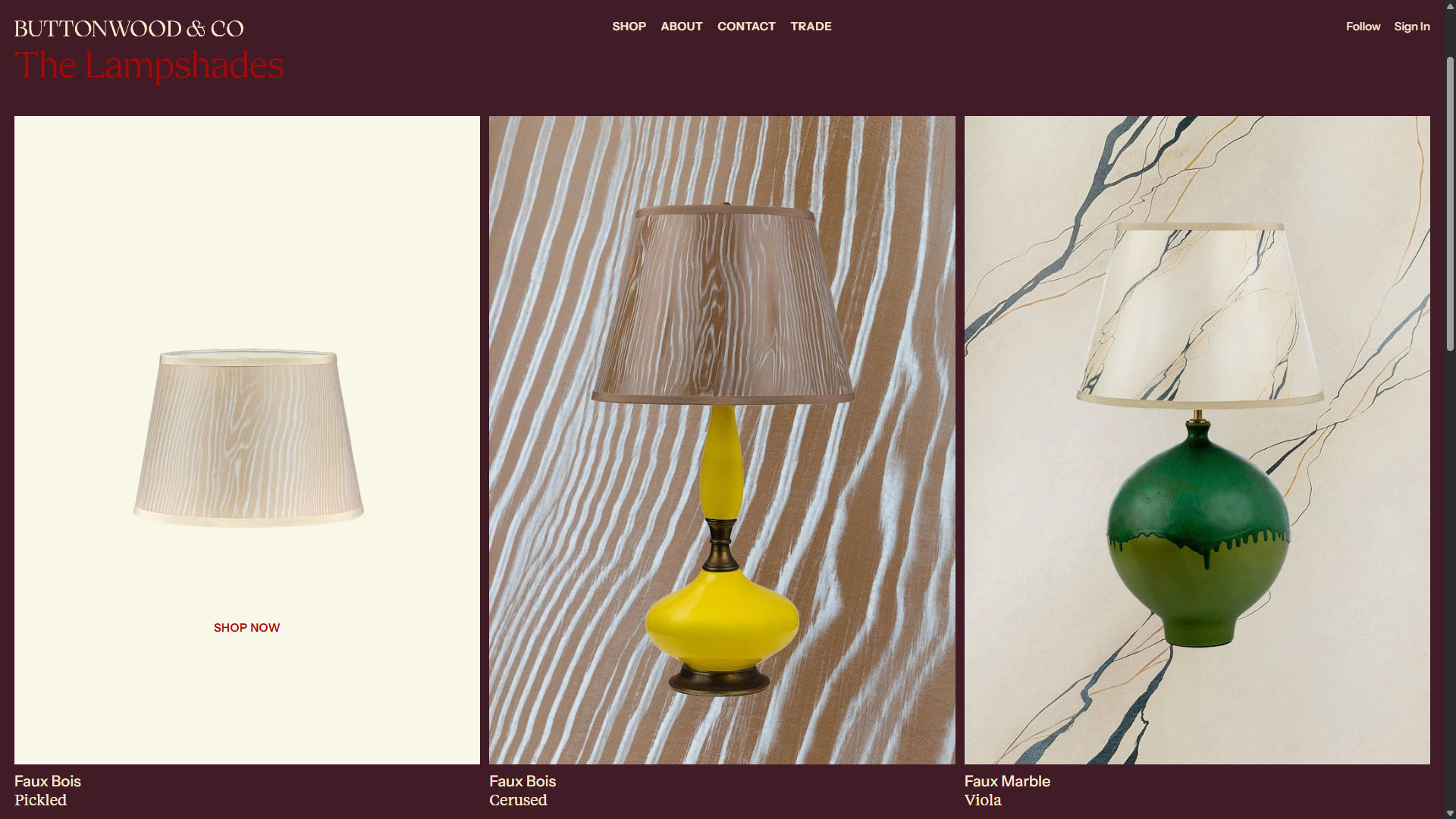
The store launched in September 2026. The Lampshades collection holds five finishes, each in five sizes, and every product page lets an approved designer pick a size, see that size’s dimensions, and choose a trim from 75 colors without the catalog ballooning into thousands of variants. Signed-out visitors see the work and a prompt to log in or apply. Approved accounts see full pricing and can order. Behind the storefront, shipping is calculated per box and per shade size, every customer email carries the brand, and the client edits homepage, product, About and policy content from the theme editor with no code. Chainlink built it as a Partner client-transfer store and handed it to the client at launch.

Challenge & Solution
The Challenge


The Solution
Custom Shopify Theme Development from Designer Comps
Chainlink stripped Shopify’s stock theme to its shell and rebuilt every section against Neiter Creative’s seven Photoshop comps. Brand colors live as design tokens with a per-page ground color system and no greys. Three licensed typefaces are self-hosted as woff2, and the layout follows the comps’ 19px margin, 1882px container and five-column grid. The logo is inline SVG using currentColor, so one file works on every page ground.


Trade-Only Shopify Store Gating and Price Protection
Prices, add-to-cart and the cart icon render only for customers carrying the trade tag. One Liquid snippet holds that rule for every surface and fails closed. An audit removed every editor section that could print a price and stripped offers from structured data. Crawler and AI-agent discovery files were overridden so the store does not advertise its product data to AI shopping agents.


Trade Application and Approval Workflow on Shopify
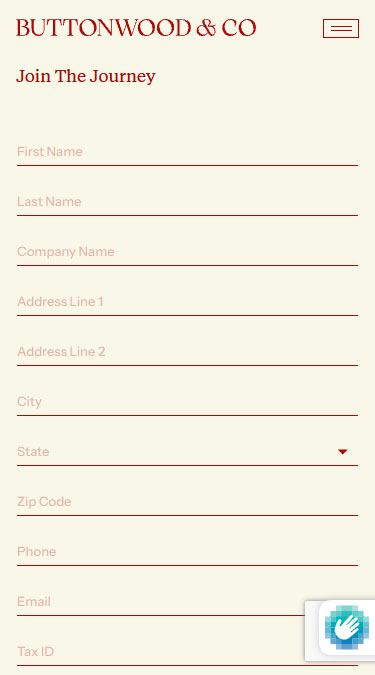
The Trade page carries an application for company, name, tax ID and a supporting document, built on a customer-registration app with an approval workflow plus Shopify customer metafields. Approving an applicant applies the trade tag and sends a branded email. The designer then signs in through Shopify’s passwordless customer accounts. Chainlink tested the deny and approve paths end to end.

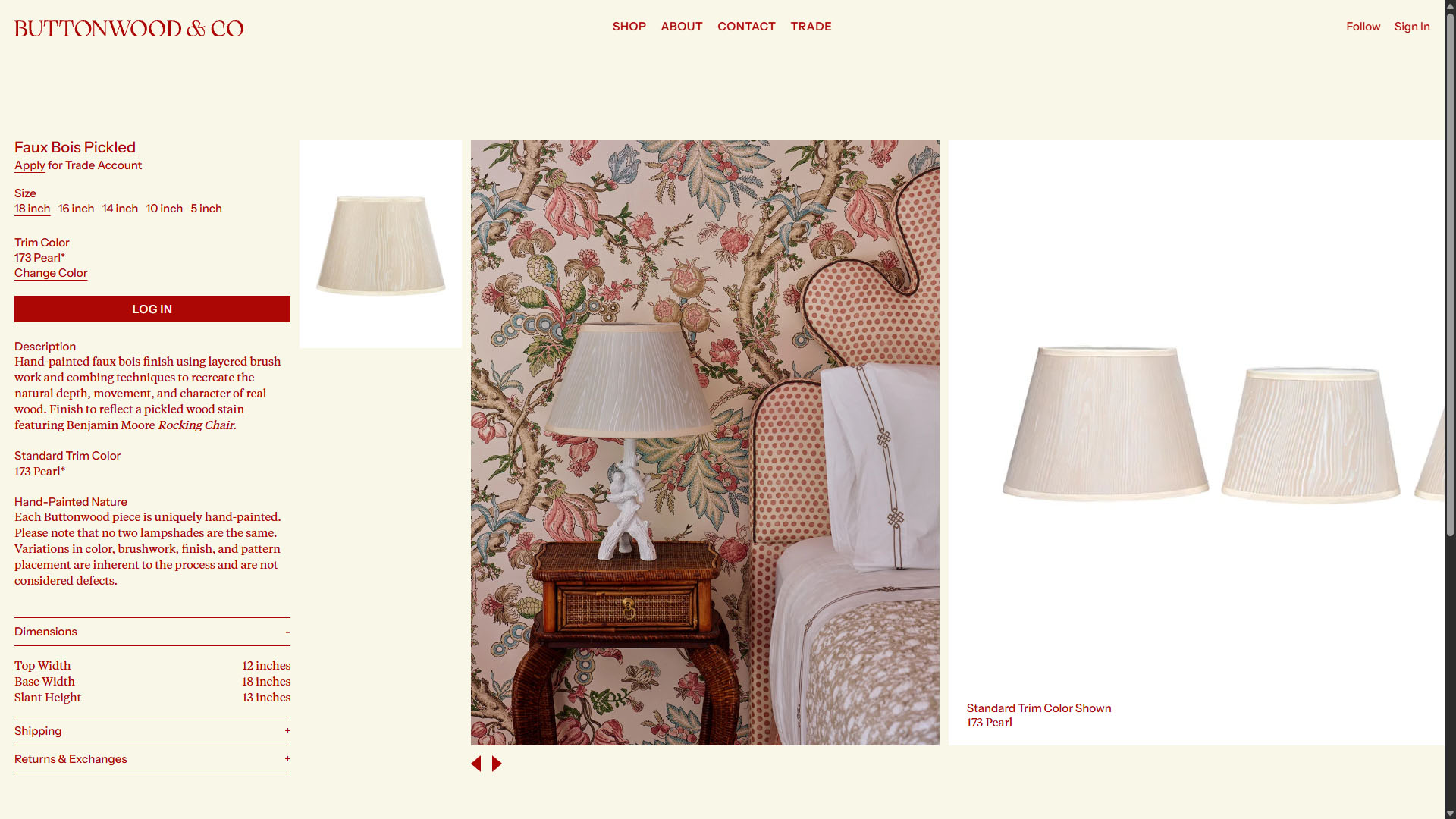
Product Page Customization: Sizes, 75 Trim Colors and Metaobjects
A size selector swaps the image and per-size dimensions stored as variant metafields. Trim is a trim_color metaobject with a default per product, and a Change Color modal paginates past Liquid’s 50-item loop cap to list all 75. The chosen trim reaches checkout as a line-item property, keeping the catalog at 25 variants instead of 1,875. Accordion drawers and a full-bleed carousel complete the page.

Shopify Store Configuration: Box-Aware Shipping, Notifications and Transfer
Five delivery profiles, one per shade size, give Shopify a box-aware flat rate that combines across sizes in one cart. All 45 customer notification templates were restyled with the brand logo, accent color and type, and the 12 that can fire on this store were checked individually. GA4 is installed, Shopify Catalog syndication is off so the catalog is not pushed to AI shopping surfaces, and the store transferred to the client at launch.



Shopify Customization and Trade-Only Shopify Stores: Common Questions
A stock theme is built to sell to everyone, and its settings assume a typical retail store: one public price, one cart, a familiar product page. Shopify customization starts where those assumptions stop fitting. A custom theme can reproduce a designer’s comps exactly, change who is allowed to see prices, restructure how options are chosen on a product page, and remove sections the client should never be able to add. Custom Shopify theme development also lets the developer decide what the theme editor exposes, so the client edits content freely without being able to break the layout or the business rules behind it.
Yes. On Buttonwood & Co the theme checks for a single customer tag, trade, before it renders a price, an add-to-cart button, the cart icon or the cart count. That check lives in one Liquid snippet that every surface uses, and it fails closed: if approval cannot be confirmed, nothing priced appears. Hiding the buy button is the easy half. The harder half is the audit, which means removing editor sections that could print a price, stripping prices from structured data and meta tags, gating the cart page, and turning off catalog syndication so the price list is not handed to AI shopping surfaces.
Keep as variants only the options that change the physical product’s box and dimensions, and move the rest out. On this store, size is the variant, because each size has its own box and its own measurements. Trim color is a trim_color metaobject, with a default trim set per product and a modal that lists all 75 colors. Liquid caps metaobject loops at 50 entries, so the modal paginates. The selected trim goes to checkout as a line-item property, so the order records it without it becoming a variant. Five products in five sizes stay at 25 variants. As variants, the same catalog would need 1,875.
Chainlink works in phases. The foundation and homepage come first: design tokens, typefaces and the grid. The product page, collection and cart follow, since that is where most of the logic lives. Then the remaining pages and the trade workflow. Before launch we run an exposure audit for any surface that leaks a price or product data, and the store transfers to the client, who chooses a plan on acceptance. For Buttonwood & Co, Neiter Creative supplied Photoshop comps and Chainlink handled development.
The price follows the scope, and the scope is mostly a count: how many templates, how many custom interactions, and how many integrations the store needs. A development-only build from finished comps, like Buttonwood & Co, prices differently from an engagement where design is also in scope. Trade gating, metaobject-driven options and custom shipping logic each add work that a standard retail store would never need, and we say plainly which of them earn their cost for your business model. Contact Chainlink with your design files or a list of pages and we will scope the build against the actual templates before we quote.
Yes. On Buttonwood & Co the client edits homepage featured products, hover words and images, the About origin story and team bios, the Contact page, carousel slides, trim defaults, per-size dimensions, policy drawers and navigation, all from the theme editor or product admin. Trade approvals happen in Shopify admin, where approving an applicant applies the tag and sends the branded email. A theme-editor toggle previews the storefront as an approved or unapproved customer, so the client can check the gate without a test account. Chainlink delivered a written inventory of every editable surface and a training runsheet. Only changes to the design system itself still need a developer.