
Commercial Real Estate Website Development Client: Centermark Commercial Real Estate | Bellaire, TX
Project Role
Commercial Real Estate Website Development
- Commercial Real Estate Website Development
- Custom WordPress Development
- Filterable Property Listings
- Responsive Mobile Experience
- On-Site SEO Optimization
- Modular CMS Architecture
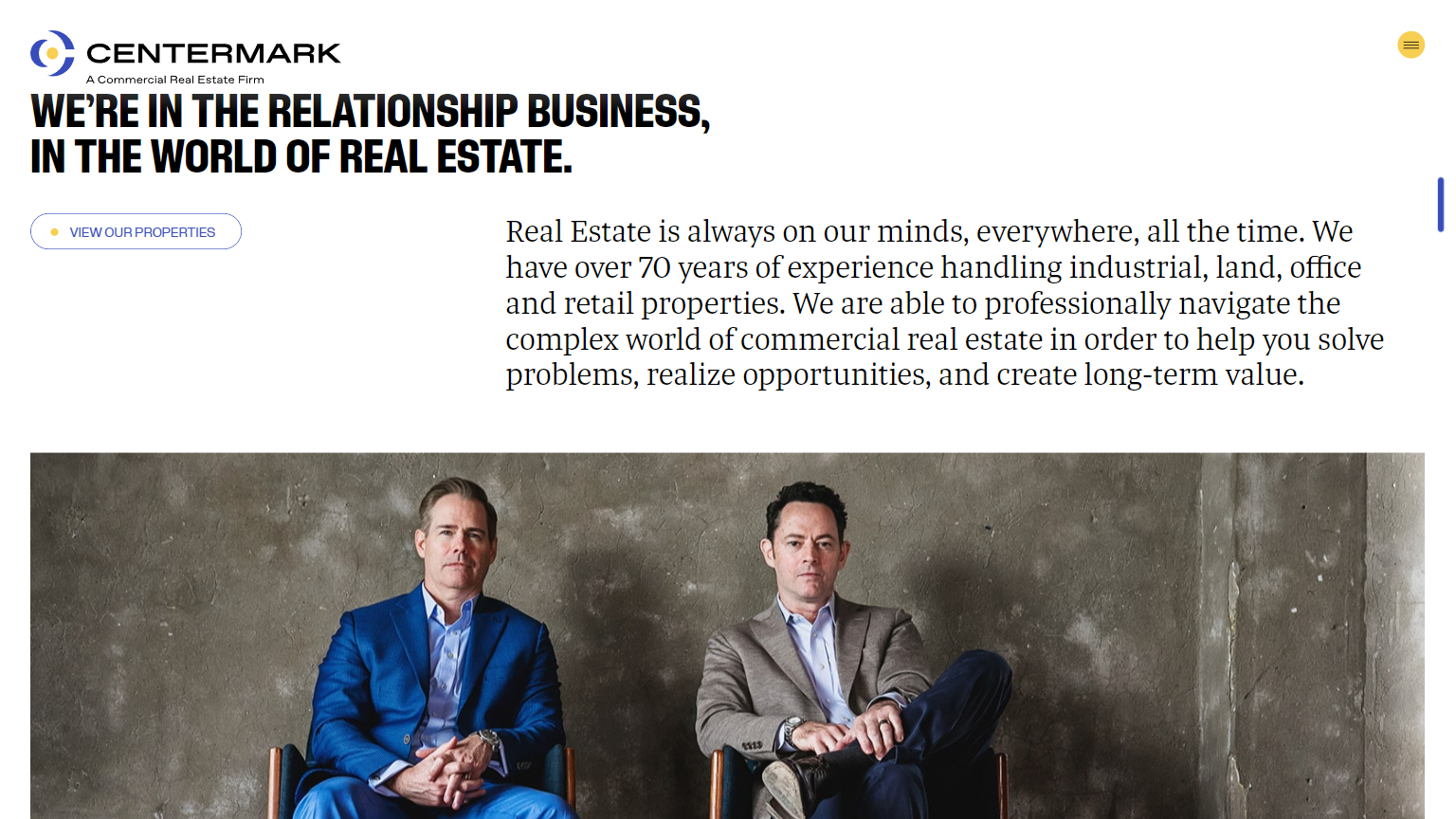
Centermark Commercial Real Estate is a boutique Houston-market brokerage with over 100 years of cumulative brokerage experience, $1.7 billion in completed lease and sale transactions, and more than 600 deals closed. Founded in 2010 and headquartered in Bellaire, Texas, the firm specializes in industrial, land, retail, and office properties across Greater Houston and into San Antonio, competing against national brokerages by leading with specialization, local market knowledge, and direct principal involvement on every transaction.
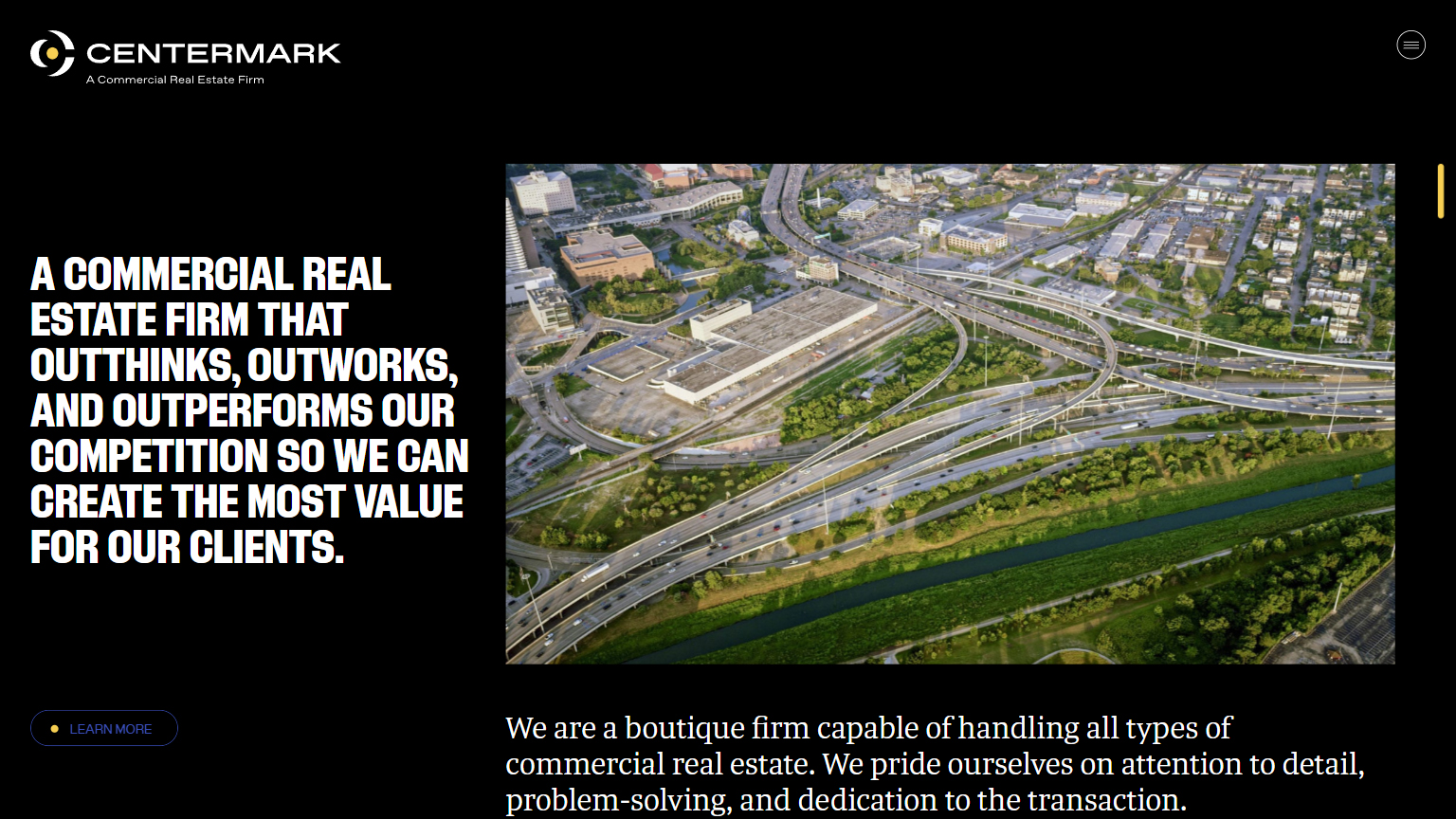
Chainlink Marketing led WordPress development and technical SEO for Centermark’s rebrand and relaunch, working alongside a design agency partner responsible for the visual identity. The development scope included a custom modular WordPress back-end, a filterable property listing system spanning four asset classes, individual listing records carrying status, acreage, square footage, clear height, and site specifications, downloadable PDF brochures attached to each property, team bio pages with detailed deal histories, a news section for transaction announcements, and a responsive mobile layer built for brokers and prospects evaluating properties from the field.
The relaunched centermarkcre.com gives Centermark’s lean team the ability to publish new listings, swap brochures, update statuses from available to leased, and post transaction news without developer involvement. For a boutique brokerage where speed-to-market on active inventory directly affects deal flow, that operational autonomy is a competitive advantage against larger firms with slower marketing pipelines. The property system currently carries more than 30 active and recently closed listings, each independently indexable for the asset-class and submarket searches tenants and investors actually run — an approach applied across Chainlink’s real estate website development work.
Challenge & Solution
The Challenge
The Solution
Custom WordPress Property Listing Back-End
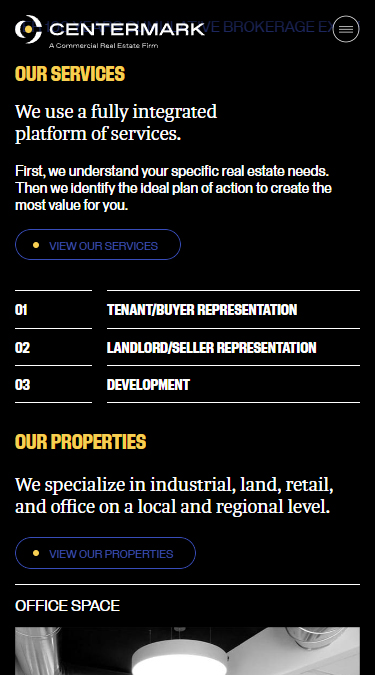
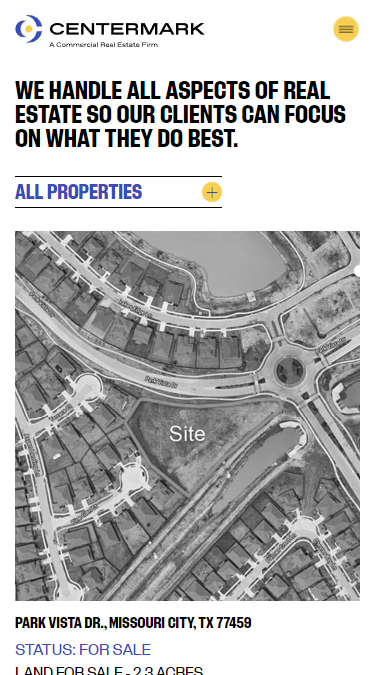
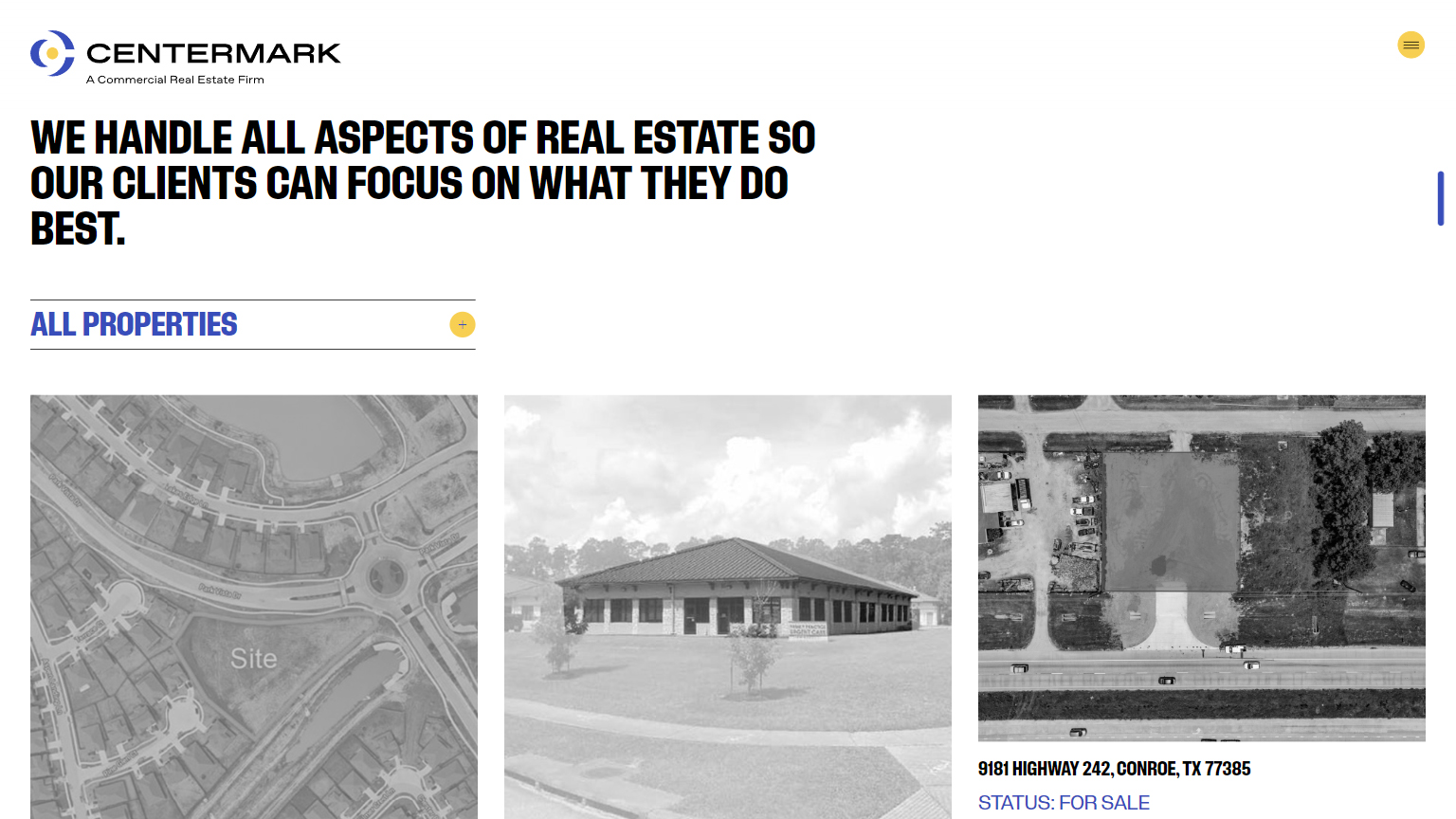
A modular WordPress back-end organizing inventory across four asset classes: industrial, land, retail, and office space. Each listing carries status, acreage, square footage, clear height, and location, plus an attached PDF brochure the team swaps as offerings change. Centermark’s staff publishes properties and updates status from available to leased without developer involvement, which for a boutique brokerage affects speed-to-market on active inventory.

Field-Ready Mobile Property Experience
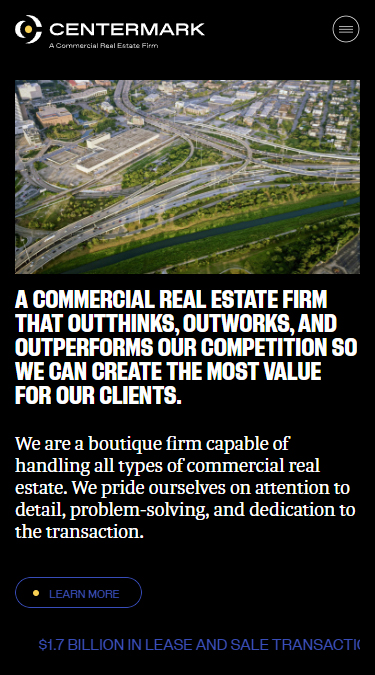
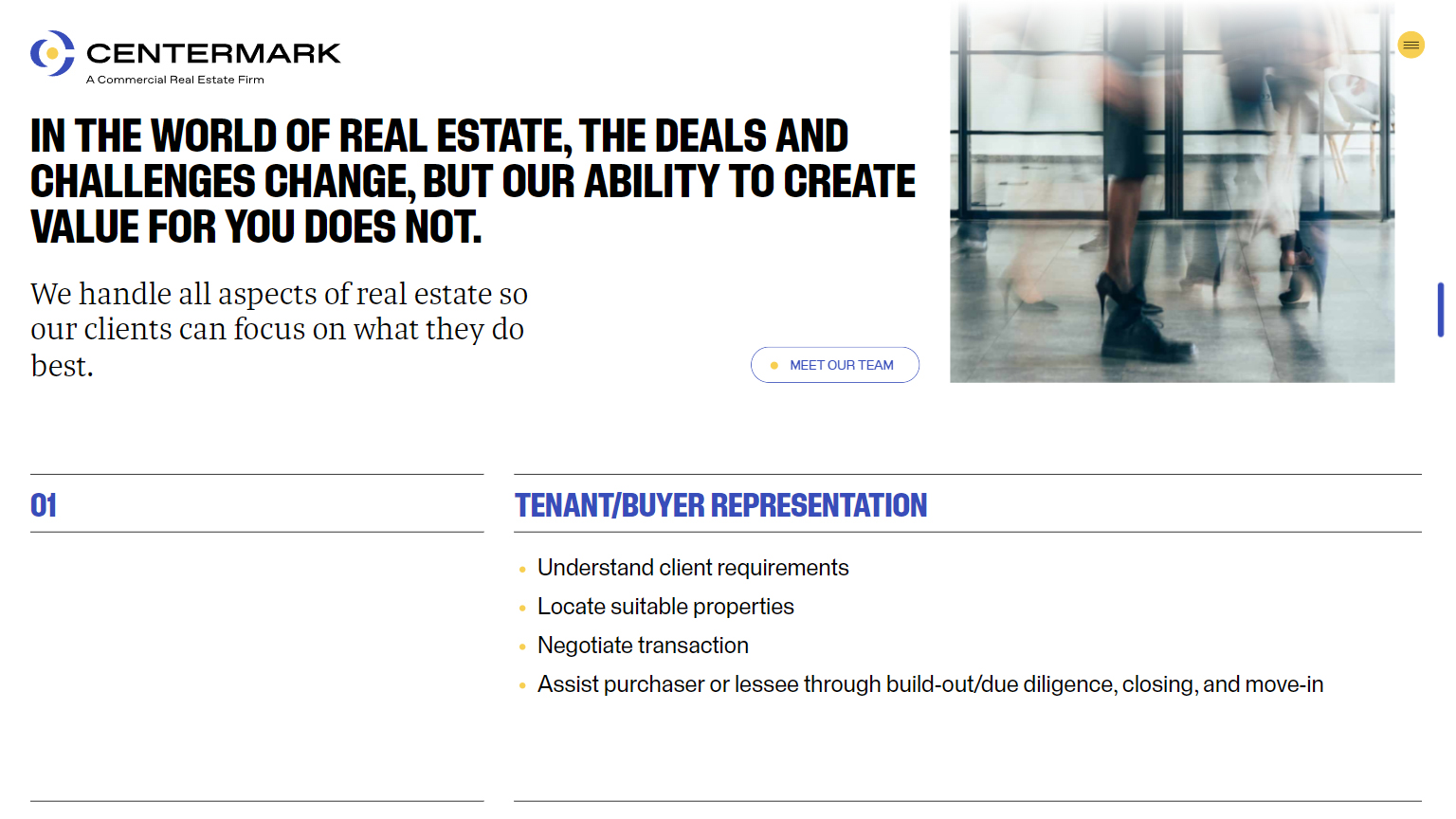
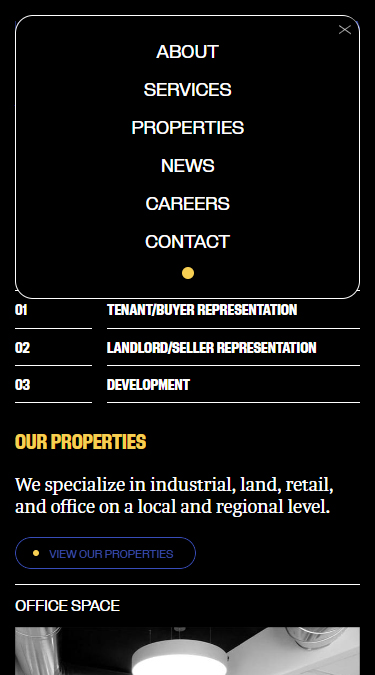
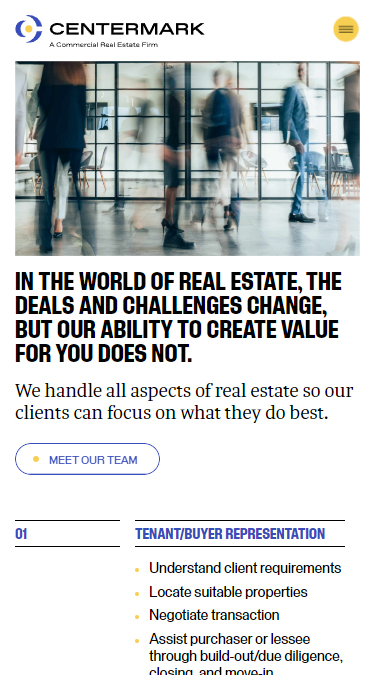
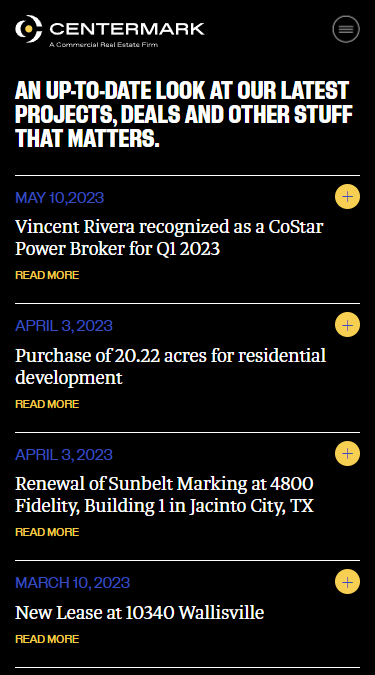
A mobile UI built around how commercial brokers and prospects actually work: reviewing available inventory between site visits, pulling specs during a drive-by, forwarding a brochure from a parking lot. Navigation, listing cards, and brochure downloads were tuned for one-handed phone use rather than scaled down from the desktop layout, closing a gap that remains common on commercial real estate websites.


Technical SEO for Houston Commercial Real Estate
On-site technical SEO, page performance optimization, and fluid responsive delivery applied across all page types, targeting commercial real estate queries throughout Houston and the surrounding Texas market. Because each of the 30+ listings is an individually indexable record, and brochure PDFs are served from Centermark’s own domain, the site accumulates search entry points at the property level rather than competing on a single page.


Commercial Real Estate Website Development: Common Questions
A commercial real estate brokerage website should include a filterable property listing system organized by asset class, individual listing records with full specifications and downloadable brochures, broker profile pages with transaction histories, a news section for closed deals, and clear contact paths for tenants, buyers, and landlords. Unlike residential real estate, CRE prospects evaluate both the property and the broker’s track record before making contact. Centermark’s site in Bellaire, Texas structures both: inventory is browsable by industrial, land, retail, and office, while each broker carries an indexable profile documenting career deal volume.
Filterable property listings on WordPress are built using custom post types for individual properties combined with taxonomy or URL-parameter filtering by asset class. Each listing carries its own metadata: status, square footage, acreage, clear height, location, and attached PDF documents. Chainlink built this architecture for Centermark, enabling the marketing team to classify and publish new properties directly from the WordPress admin and update status from available to leased without developer support. The filterable front end lets prospects narrow to the inventory relevant to their requirements rather than scrolling an undifferentiated list.
Very important, and frequently underbuilt on commercial real estate sites. While major investment and leasing decisions are not finalized on a phone, CRE prospects routinely search for available properties, review broker credentials, and download brochures from mobile devices between site visits and meetings. A desktop layout scaled down does not serve that use case. Centermark’s mobile experience was built specifically around field usage: fast listing navigation, readable specification blocks, and one-tap brochure downloads. For a brokerage whose prospects spend their days driving between properties, that distinction affects whether an inquiry happens at all.
Custom WordPress development for a commercial real estate brokerage, including a filterable property listing system, per-listing document management, broker profile pages, and technical SEO, typically starts in the $15,000 to $30,000+ range. Scope drivers include the number of asset classes and filter dimensions, whether listing data syncs from an external platform such as CoStar or Crexi, and the depth of the team and news sections. Brokerages working with a separate design partner, as Centermark did, should budget visual design separately from development. Contact Chainlink to discuss scope for your brokerage.
Individual listing records are strongly preferable for search visibility. A single properties page competes for one set of keywords, while individual records can each rank for property-specific and submarket queries such as warehouse space in Stafford or industrial land near the Port of Houston. Attached PDF brochures served from the brokerage’s own domain add a second layer of indexable content that frequently ranks independently. On Centermark’s site, this structure means more than 30 listings function as distinct search entry points rather than one page carrying the entire inventory.