
Restaurant Website Development for Multi-Location Dining Groups Client: Relish Restaurant & Bar | Houston, TX
Project Role
Restaurant Website Development for Multi-Location Dining Groups
- Restaurant Website Design & Development
- Multi-Location Site Architecture
- Dynamic Multi-Menu System
- OpenTable & Toast Integration
- Private Dining Inquiry Build
- On-Site SEO Optimization
- WordPress CMS Configuration
Relish Restaurant & Bar is a Houston dining institution with two locations — River Oaks and Memorial — serving refined American classics with Mediterranean influences from Italy and France, under the Fine Foods Hospitality group. The brand built its following on a hospitality philosophy as straightforward as it is exacting: to earn a permanent place in the hearts of Houstonians by caring for every guest to the highest standards. When Relish expanded to its Memorial location, the website relaunch became an opportunity to build a digital presence that could finally match that ambition across two of Houston’s most discerning neighborhoods.
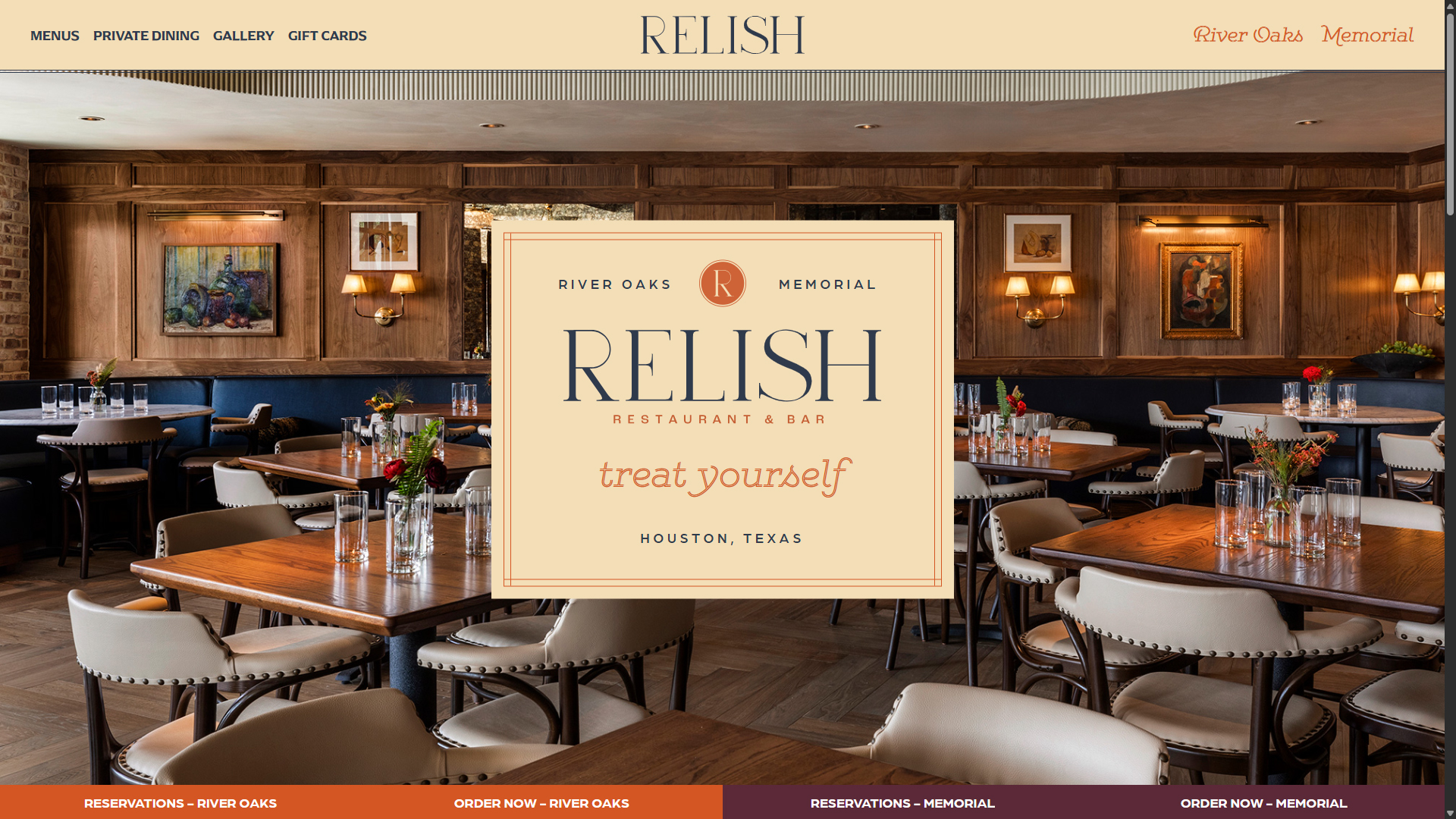
Chainlink served as the development partner — executing a visual design delivered by Neiter Creative — and built a WordPress platform capable of handling the full operational complexity of a two-location, multi-menu restaurant. The scope covered the complete site architecture: dedicated location pages for River Oaks and Memorial, a dynamic menu system supporting seven distinct service categories (happy hour, kids, brunch, lunch, dinner, drinks, and after-dinner) manageable per location, OpenTable reservation integrations for both addresses, Toast online ordering integrations, a private dining inquiry form for events of 80 to 120 guests, and a photo gallery.
The result is a restaurant website that does what multi-location hospitality brands actually need: it absorbs operational complexity without surfacing it. Menus stay current per location and per service time; reservations and online orders route cleanly to the right address; private dining inquiries flow directly to the team. For a brand expanding its Houston footprint, the website functions as a permanent front-of-house — setting expectations and making the first impression before a guest ever walks through the door.
Challenge & Solution
The Challenge
The Solution
Multi-Location Restaurant Website Architecture
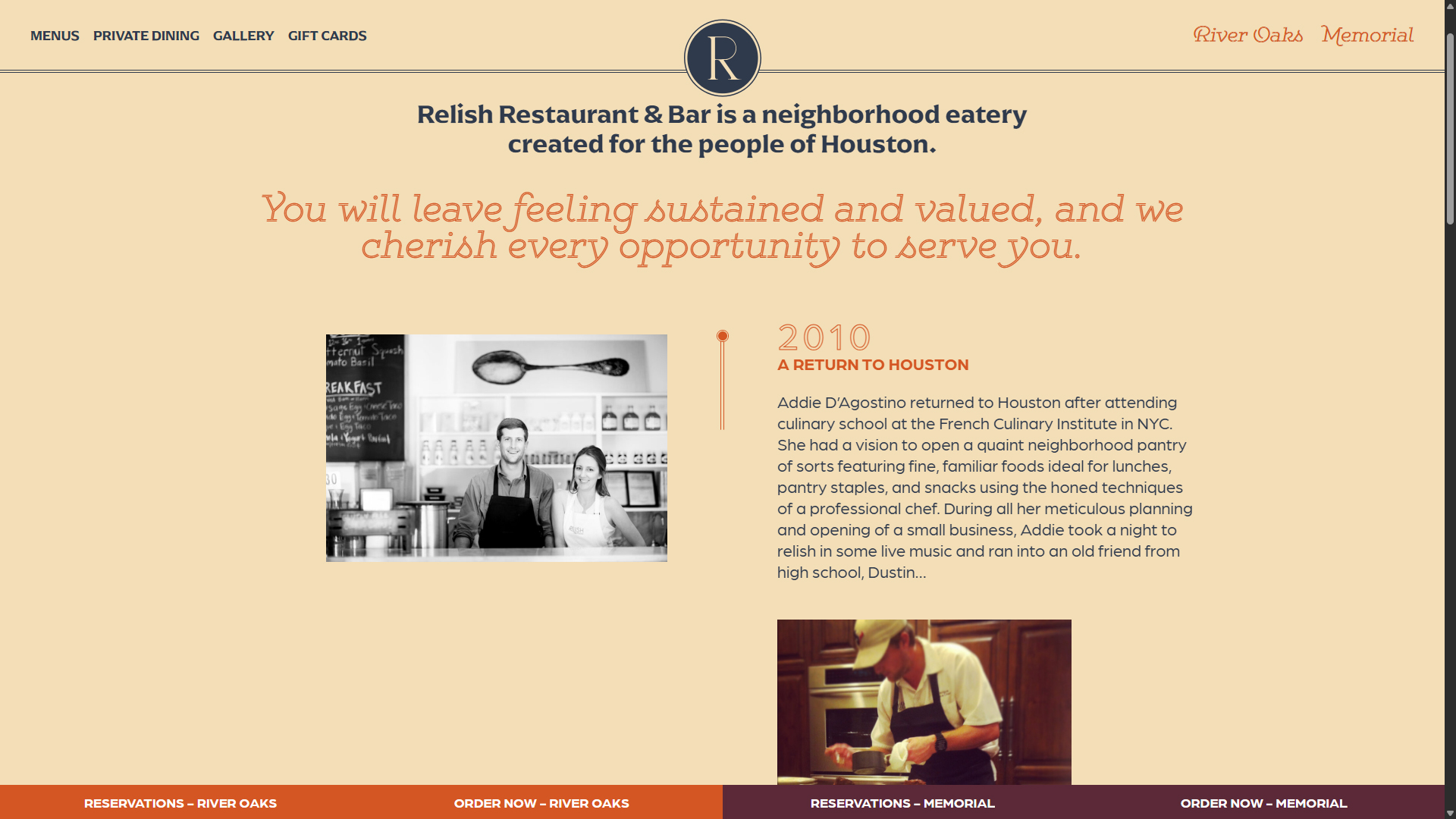
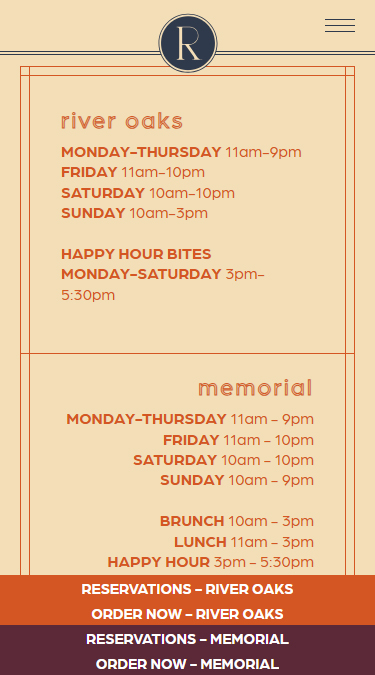
Building a two-location restaurant site requires a content architecture that gives each location its own identity within a unified brand system. Chainlink built dedicated River Oaks and Memorial pages with location-specific hours, reservation links, and online ordering — ensuring every visitor lands in the right place and takes the right next step. For a growing Houston hospitality brand, this architecture scales cleanly as the footprint expands.
Dynamic Multi-Menu System
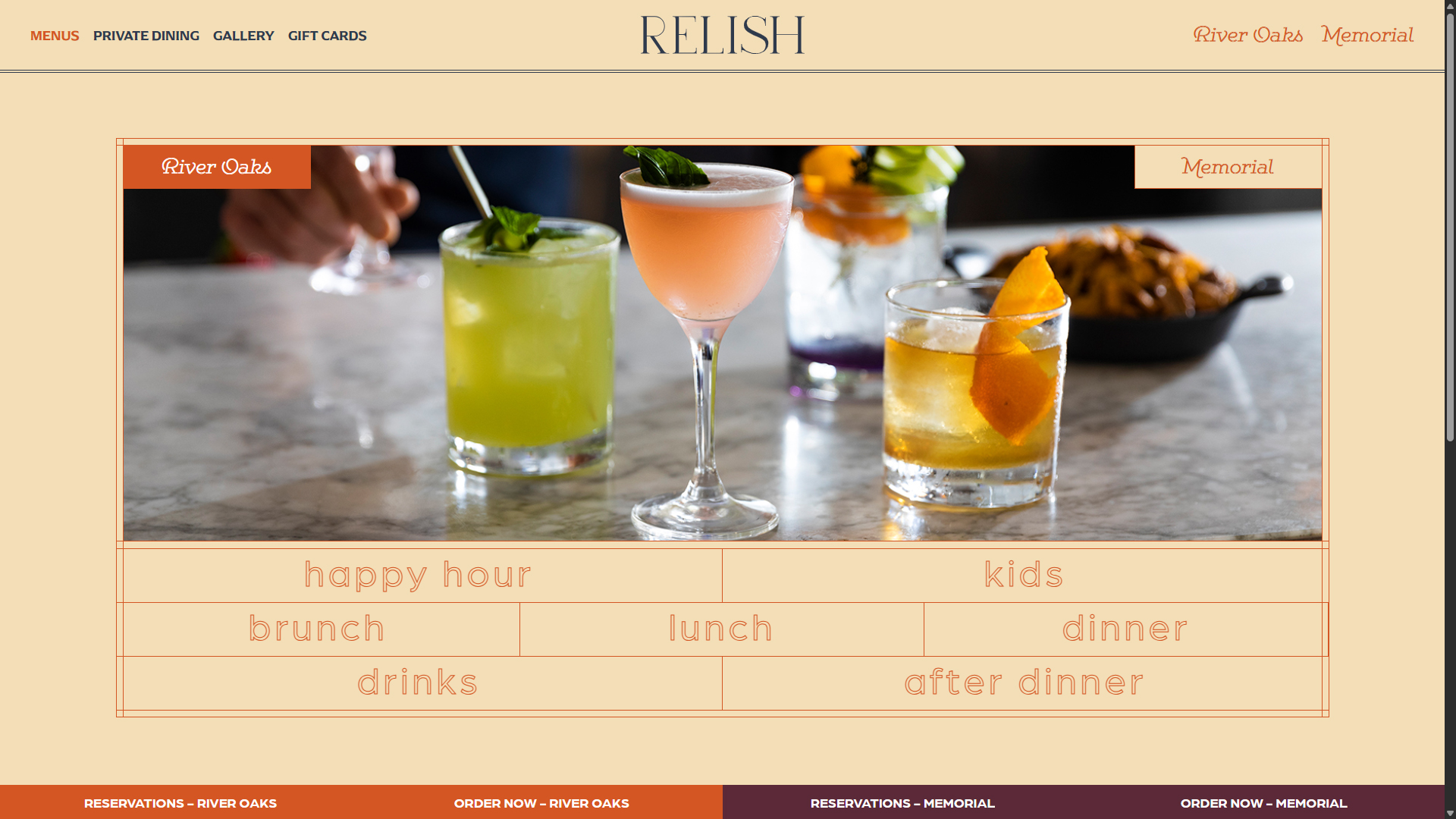
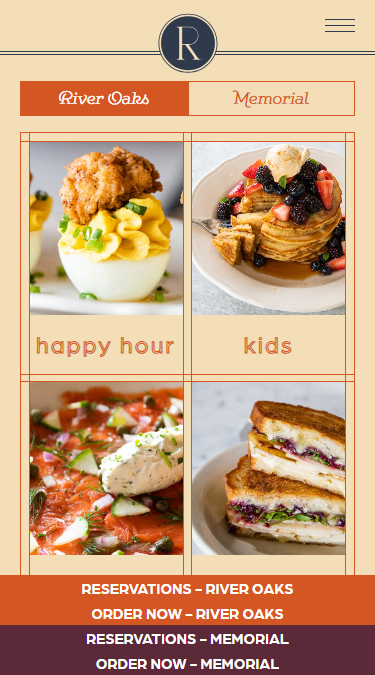
Relish runs seven distinct menu categories — happy hour, kids, brunch, lunch, dinner, drinks, and after-dinner — across two locations, each updated regularly. Chainlink built a modular WordPress backend that lets the Relish team manage menus per location and per service time without developer involvement. The result: what guests see on the site is always current, and the team isn’t dependent on a developer every time the cocktail list changes.
OpenTable & Toast Reservation Integration
Guests at both Relish locations can reserve via OpenTable or order via Toast directly from the site, each routing to the correct address. Chainlink wired both systems into the River Oaks and Memorial pages independently — no misdirected guests, no friction. For a neighborhood restaurant competing for covers in two of Houston’s most active dining corridors, seamless reservation and ordering integration is a direct contributor to revenue.

Restaurant Website Development: Common Questions
A multi-location restaurant website requires a content architecture that gives each location its own presence — dedicated pages with location-specific hours, menus, reservation links, and online ordering — while maintaining a unified brand across the full site. The most common mistake is treating it as a single-location site with a locations dropdown, which forces guests to hunt for information relevant to them and risks routing them to the wrong place entirely. For Relish Restaurant & Bar, Chainlink built dedicated River Oaks and Memorial pages with all location-specific content and integrations independent of each other, so every visitor lands in the right context and converts to the right action.
Restaurant menus require a backend the team can update without developer involvement, because menus change constantly: seasonal rotations, cocktail additions, happy hour specials, service-time-specific offerings. For Relish, which runs seven distinct menu categories across two Houston locations, Chainlink built a modular WordPress backend that lets the marketing team update menus per location and per service period independently. The key design principle is that the CMS requires no technical knowledge to operate and front-end changes reflect immediately. When the cocktail list changes on a Tuesday, it should be live on the site by Tuesday.
OpenTable and Toast are the two most common reservation and ordering platforms for restaurant websites, and both are integration-ready — but for a multi-location restaurant, the implementation requires routing each system to the correct location independently. Chainlink wired separate OpenTable reservation links and Toast online ordering flows for both Relish locations, ensuring River Oaks and Memorial guests are never misdirected to the wrong address or ordering queue. For a neighborhood restaurant where a misdirected reservation can mean a lost cover, accurate location-level integration is a basic operational requirement, not a feature.
WordPress is the most practical CMS for restaurant websites because it gives operations and marketing teams direct control over menus, hours, events, and content without ongoing developer cost. For multi-location restaurants with complex menu management — multiple service periods, rotating specials, location-specific content — a well-structured WordPress backend dramatically reduces the operational burden of keeping the site current. Chainlink built Relish’s CMS so the team can manage all content for both locations independently, from the dinner menu to the private dining inquiry form, without touching code.
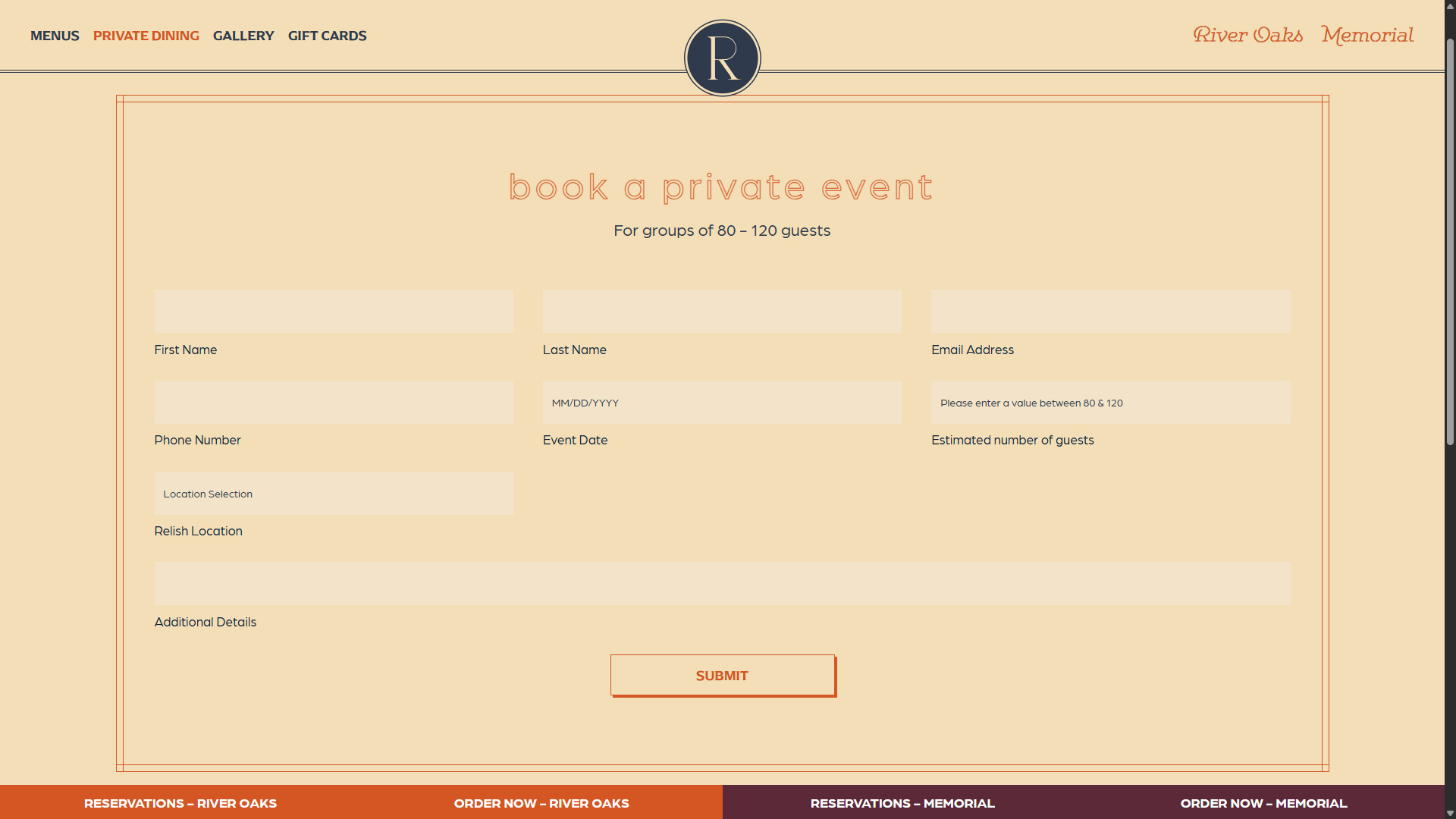
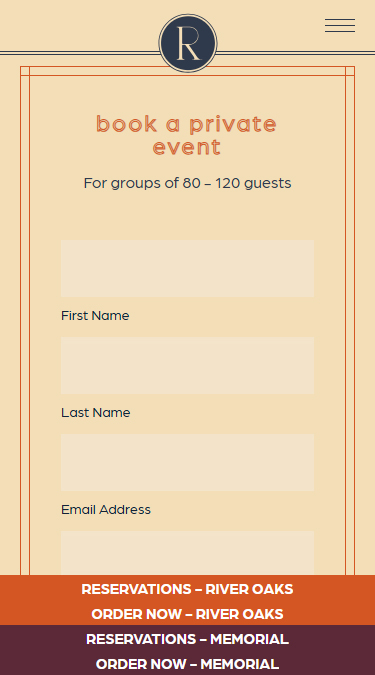
A private dining page should do two things: give prospective event guests enough information to self-qualify — capacity, locations, event types — and make the inquiry as frictionless as possible. For Relish, Chainlink built a dedicated private dining page with a location-selector inquiry form for groups of 80 to 120 guests, capturing event date, guest count, location preference, and notes so the team receives qualified, actionable inquiries rather than vague contact form submissions. Private dining is a meaningful revenue stream for multi-location restaurants; the website should treat it as one.
A custom restaurant website from a professional agency typically ranges from $20,000 to $40,000+, depending on the number of locations, menu management complexity, third-party integrations (OpenTable, Toast, Resy), and the number of custom templates required. Multi-location builds with per-location content management, multiple reservation and ordering integrations, and private dining functionality sit toward the higher end of that range. Chainlink builds restaurant websites for independent restaurants, hospitality groups, and multi-location dining brands. Contact us to discuss the right scope for your restaurant.