
Fine Dining Restaurant Website Development in New Orleans Client: Emeril’s | New Orleans, LA
Project Role
Fine Dining Restaurant Website Development in New Orleans
- Restaurant Website Design & Development
- Modular WordPress Backend Development
- Resy Reservation Integration
- GreenSock JS Animation
- Interactive Menu Development
- On-Site SEO Optimization
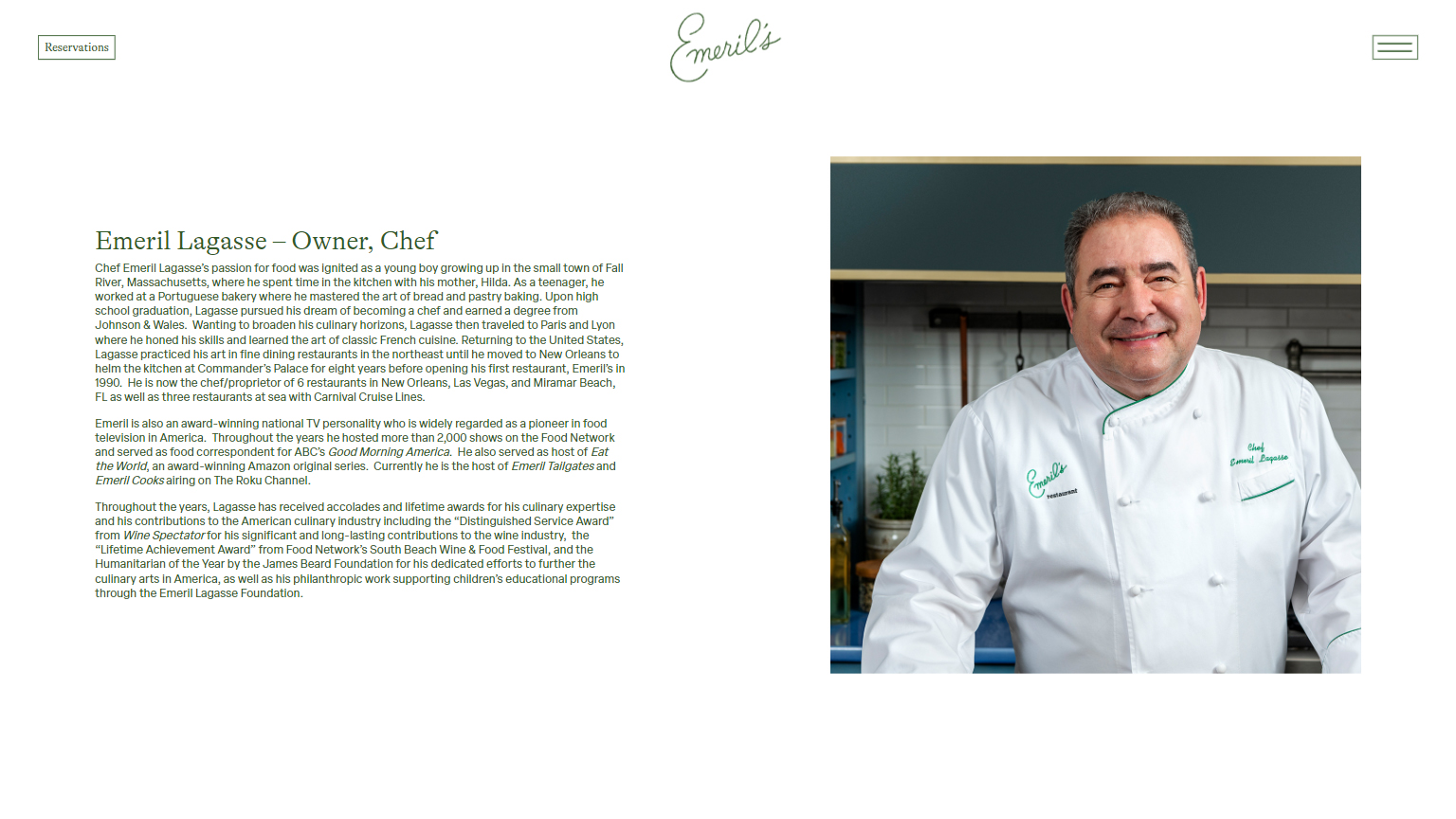
Emeril’s is the two-Michelin-starred flagship of Chef Emeril Lagasse, opened in 1990 in the Warehouse District of New Orleans and widely regarded as one of the most consequential fine dining institutions in American culinary history. After a sweeping renovation in 2023 and a generational handoff to Chef E.J. Lagasse, who made history in 2025 as the youngest chef in the world to lead a two-Michelin-starred restaurant, Emeril’s needed a digital presence that matched the caliber of its reinvented experience. Holding AAA Five Diamond status, Relais & Châteaux membership, and Les Grandes Tables du Monde designation, the restaurant’s audience is global: destination diners, serious food travelers, and fine dining guests who vet every detail before they book.
Chainlink served as the development partner on this project, with visual design led by Neiter Creative. The WordPress buildout runs on a fully custom modular ACF backend designed for content independence, Emeril’s team can update the seasonal tasting menu, rotating wine program, staff profiles, and the Farmers & Foragers sourcing section without developer involvement. Chainlink also implemented GreenSock JS (GSAP) animations across hero sections and interactive elements, a context-aware dual-path Resy reservation integration routing visitors to the correct booking flow based on whether they are browsing the main dining room or The Wine Bar at Emeril’s, and a full on-site SEO optimization pass to protect domain authority through the relaunch.
The relaunched emerilsrestaurant.com functions as the primary reservation driver and brand expression platform for one of the most decorated restaurants in the American South. For a dining room where guests fly in from around the world and plan visits months in advance, the website is not a secondary touchpoint, it is the opening act. The dual-entity structure supporting both Emeril’s and The Wine Bar under a single domain gives the broader Emeril Group a scalable digital model as the property continues to accumulate international recognition. The site now reflects the same standard of craft and precision a two-Michelin-star, Five Diamond, Relais & Châteaux restaurant demands from everything it puts in front of a guest.
Challenge & Solution
The Challenge
The Solution
Fine Dining Restaurant Website Architecture
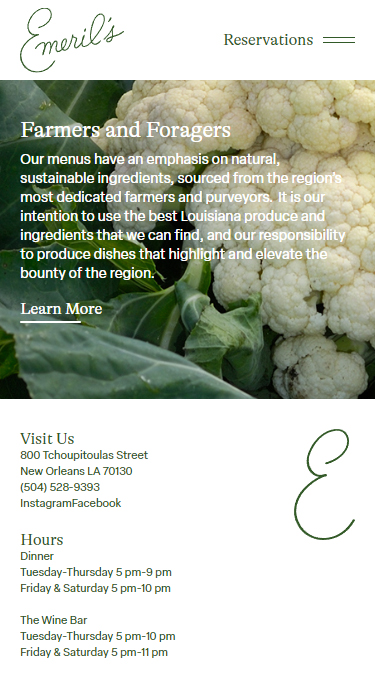
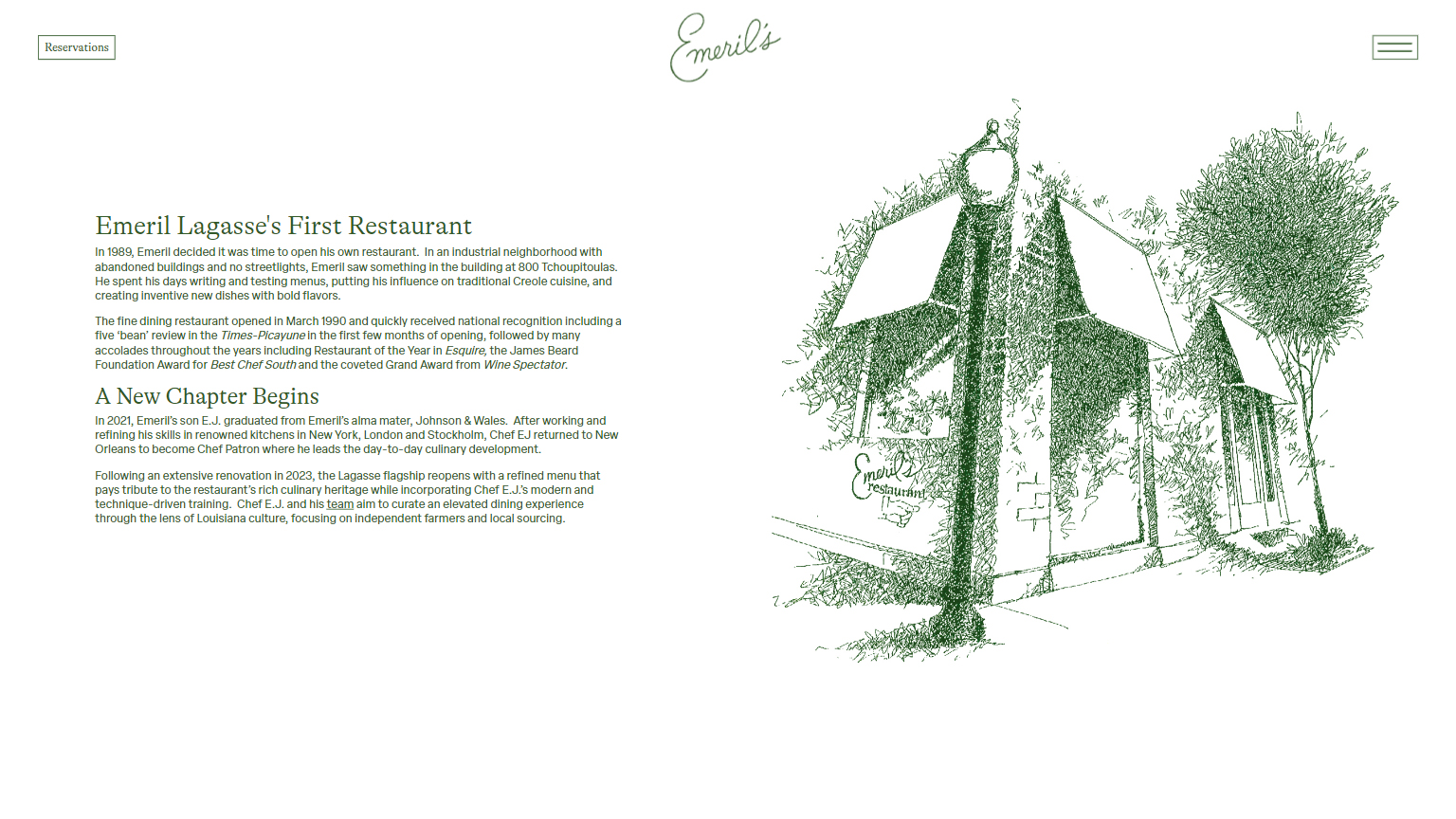
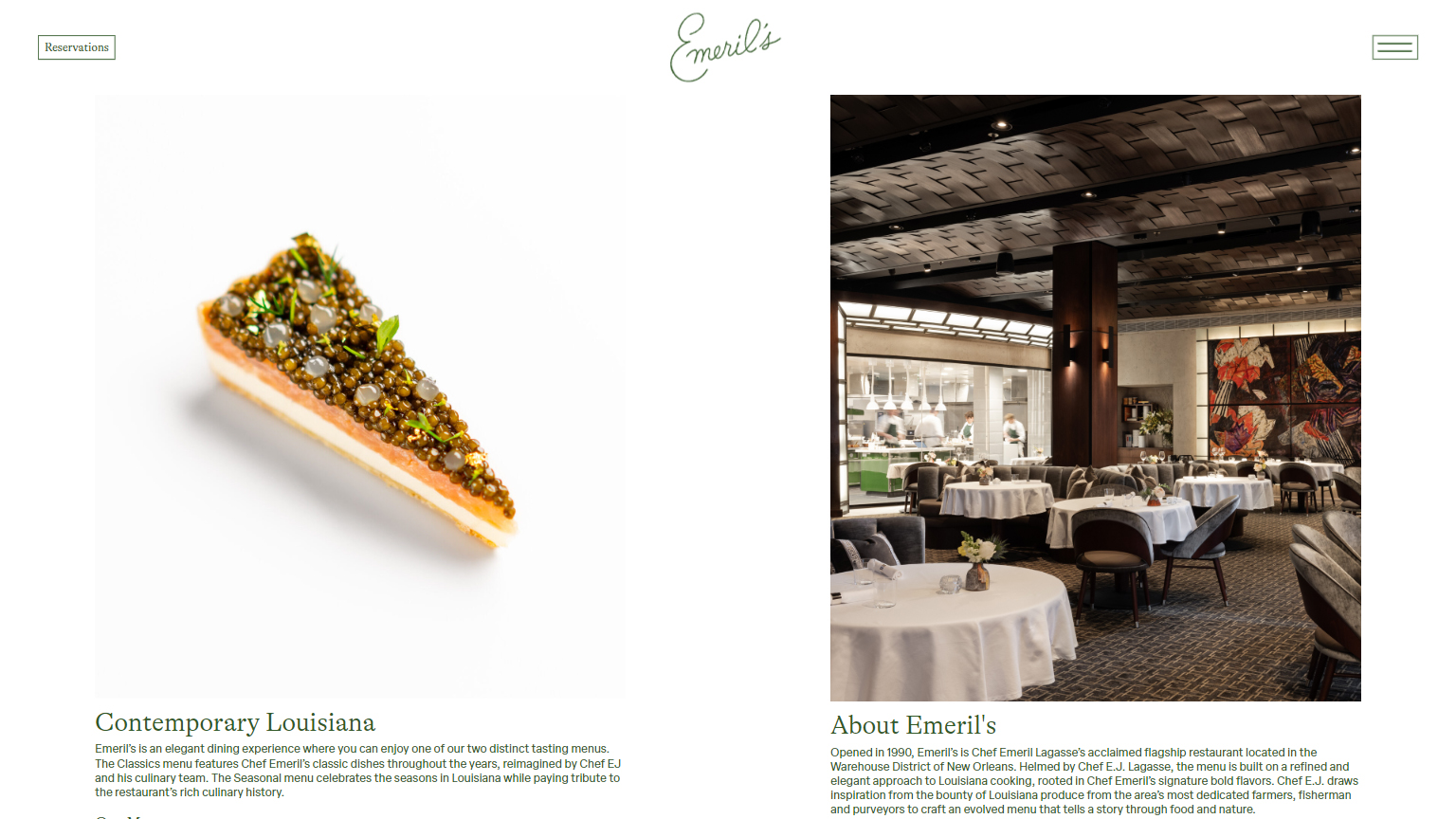
Chainlink built a fully custom WordPress site for Emeril’s on a modular ACF backend structured to accommodate the restaurant’s layered content — tasting menu, wine program, Farmers & Foragers sourcing, private dining, and team profiles. The architecture was designed for content independence, giving Emeril’s team full editorial control over every section without developer involvement. For a two-Michelin-star institution with continuously evolving seasonal programming, a self-maintained, editorial-quality CMS is not a convenience — it is a business requirement.
Dual-Venue Resy Reservation Integration
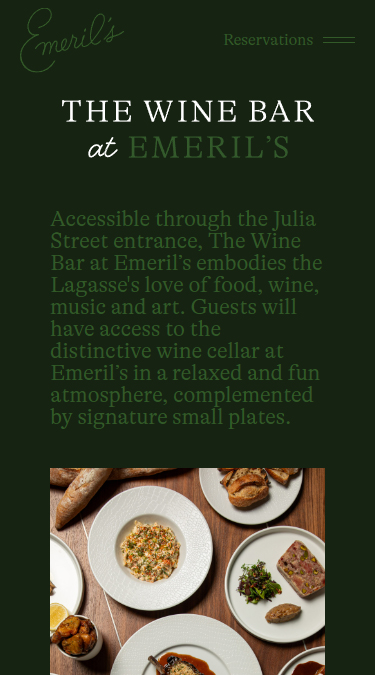
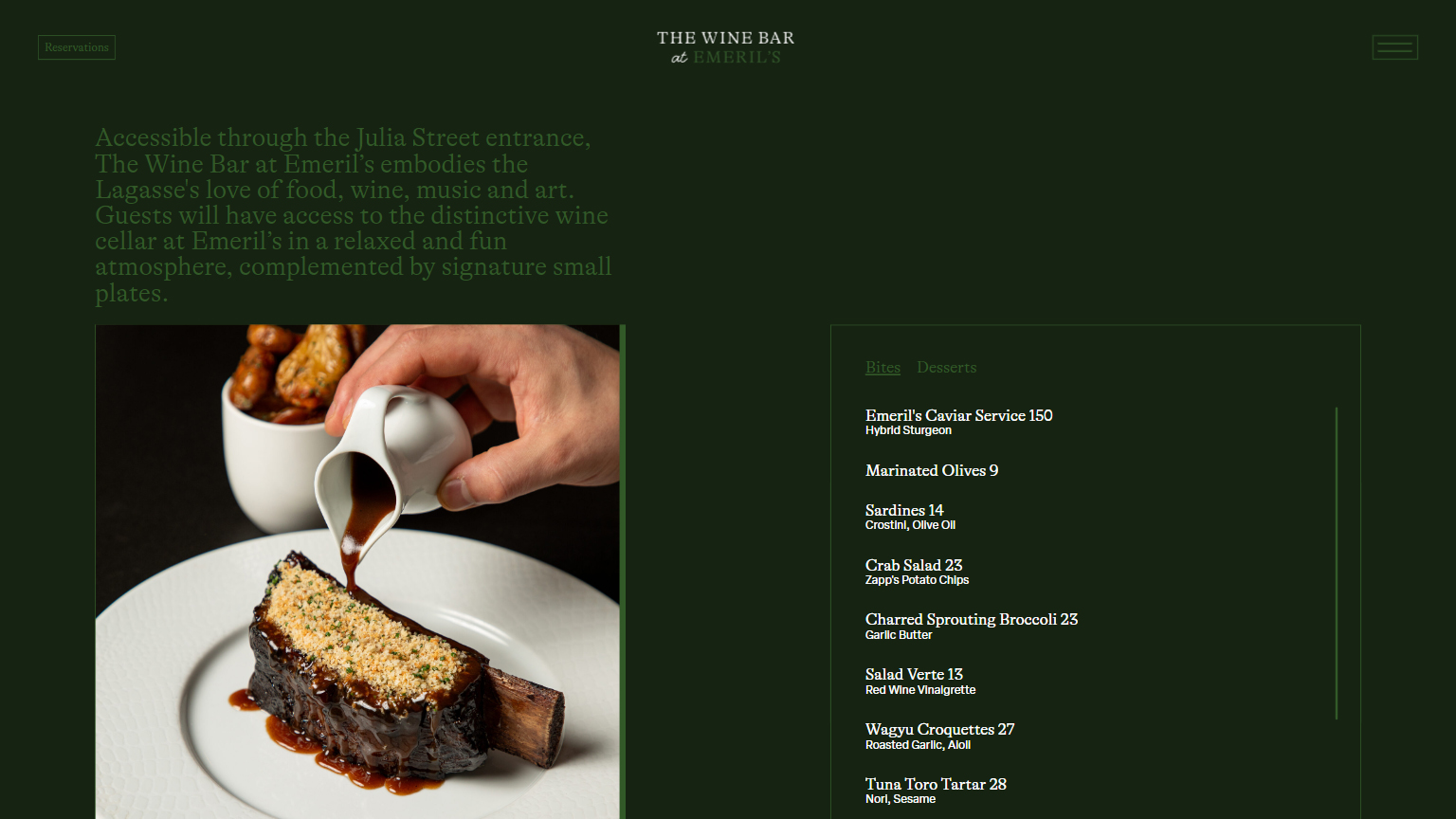
Emeril’s operates as two distinct dining experiences under one roof — the main restaurant and The Wine Bar at Emeril’s — each with a separate Resy booking flow. Chainlink built a context-aware reservation system that surfaces the correct booking link based on where a visitor is browsing the site, eliminating friction at the most critical conversion point. This ensures every page drives the right reservation outcome without requiring a guest to navigate away or search for the correct venue.
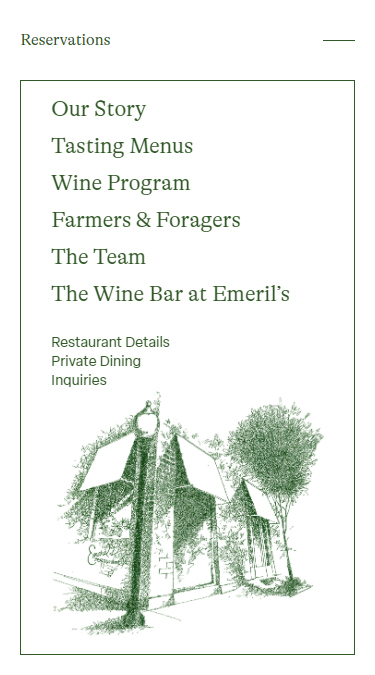
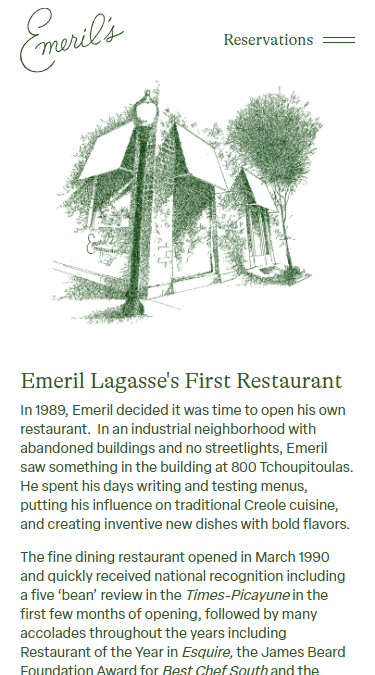
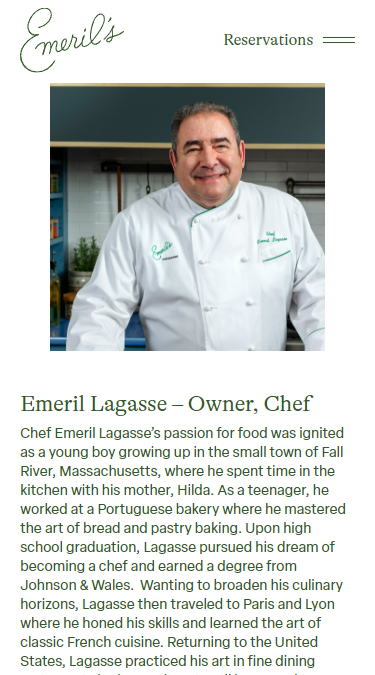
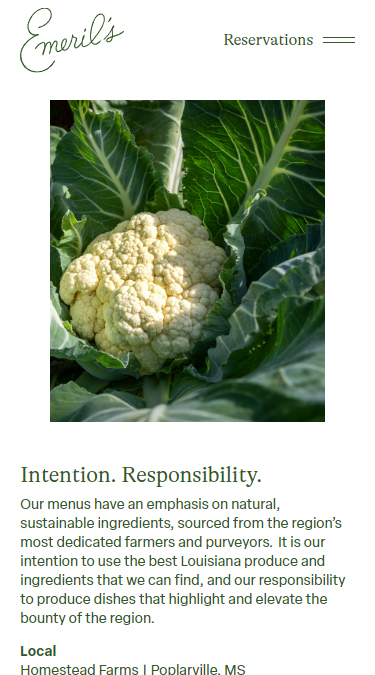
Mobile-Responsive Menu & Wine Program UI
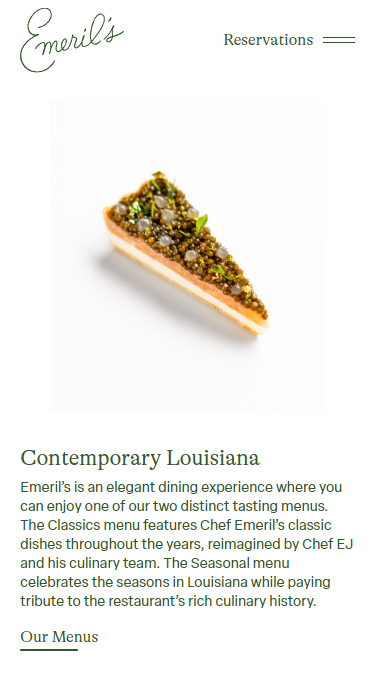
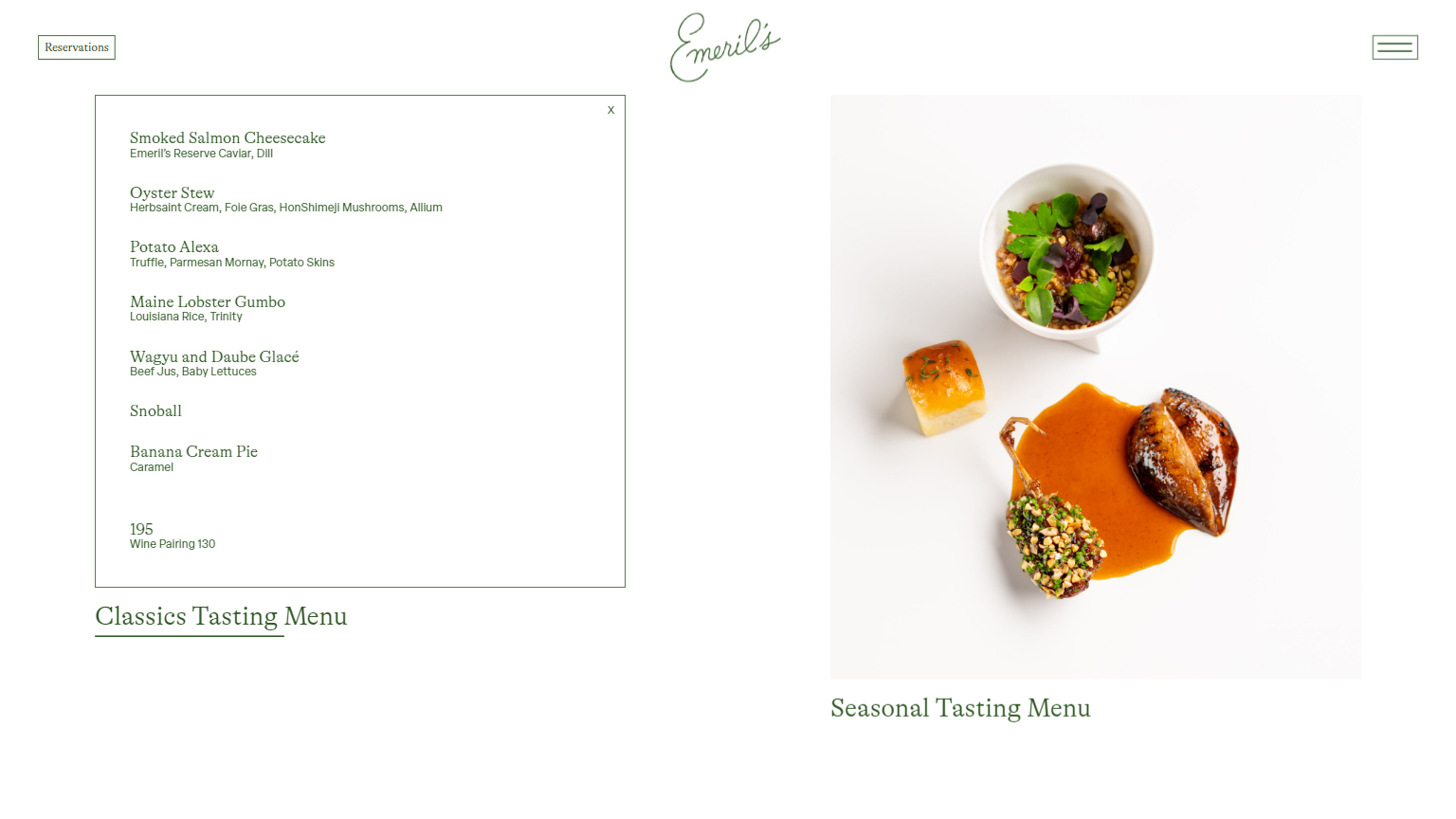
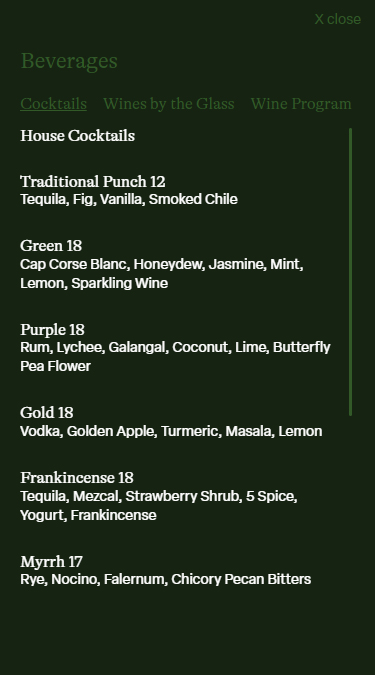
Emeril’s tasting menu and wine program are central to the dining narrative — both were built as fully mobile-responsive, ACF-managed sections that staff can update without developer involvement. The animated menu layout accommodates seasonal program changes as dishes and wine selections evolve, which is essential for a restaurant earning coverage in international dining guides. On mobile, the browsing experience delivers the same editorial precision guests expect from a two-Michelin-star institution.
GSAP Animation & On-Site SEO Optimization
GreenSock JS (GSAP) animations were applied across hero sections, menus, and interactive elements to add motion to the Emeril’s brand without compromising load performance. Chainlink also completed full on-site SEO optimization to preserve domain authority through the relaunch and position the site for destination dining searches in New Orleans. For a restaurant drawing international guests, search visibility is as important as the dining room experience itself.
Restaurant Website Development: Common Questions
A fine dining restaurant website needs to function as both a reservation driver and a brand experience platform. Essential elements include a mobile-optimized menu with seasonal update capability, a prominently surfaced reservation CTA, staff and story pages that build anticipation, and a wine program section. For restaurants operating multiple dining concepts under one roof — as Emeril’s does with its main dining room and The Wine Bar at Emeril’s — the site architecture should also support separate content and booking flows for each venue. The goal is to communicate the caliber of the experience before a guest ever arrives.
Restaurant reservation integrations connect the website to an external booking platform — most commonly Resy, OpenTable, or Tock — and should be seamlessly embedded, brand-consistent, and present at every logical conversion point across the site. For Emeril’s in New Orleans, which operates as both a full-service restaurant and a separate wine bar, Chainlink built a context-aware dual-path integration: the reservation button automatically surfaces the correct Resy booking flow based on which section of the site a visitor is viewing, so guests are never routed to the wrong venue. The system required custom logic to detect page context and render the appropriate link dynamically.
The most effective approach is building the menu as a content-managed section in the CMS — typically WordPress with custom fields — so that staff can update dishes, descriptions, and wine pairings without submitting a development request. On Emeril’s website, Chainlink built the tasting menu and wine program as fully editable ACF-powered sections, giving Emeril’s marketing team the ability to reflect seasonal changes and new programming in real time. This kind of content independence is standard on all Chainlink restaurant builds and is especially important for tasting menu formats, where the content changes more frequently than on a traditional à la carte site.
GreenSock (GSAP) is a JavaScript animation library used to create smooth, high-performance motion effects on web pages — animated text reveals, image transitions, and interactive hover states. On restaurant websites, it adds a layer of elegance and brand personality that static layouts cannot achieve. Chainlink used GSAP animations on Emeril’s site to bring motion to hero sections, menu interactions, and page transitions, creating a browsing experience that matches the tactile, experiential nature of fine dining. Because GSAP is performance-optimized, the animations run without meaningfully impacting page load — an important consideration for a site where first impressions carry significant weight.
Restaurant website redesign costs typically range from $20,000 to $50,000 or more depending on scope. A single-location site with standard reservation integration and a content-managed menu falls on the lower end; a multi-concept property with custom GSAP animation, context-aware dual-venue reservation logic, an ACF-powered menu and wine program, private dining pages, and a full SEO build-out sits at the higher end of that range. Contact Chainlink to discuss the specific scope of your restaurant’s digital project and get an accurate estimate for your needs.
Yes — and this requirement is more common than it might appear. Restaurants with a distinct wine bar, private dining room, or secondary dining concept under one roof need the site to handle both without confusing guests or sending them to the wrong booking flow. Chainlink solved this for Emeril’s in New Orleans by building a context-aware system that detects which part of the site a user is browsing and automatically routes them to the correct Resy link — either for the main Emeril’s dining room or The Wine Bar at Emeril’s — without requiring the visitor to make that determination themselves.