
Custom Shopify and WooCommerce development
Stores built around how you sell
A stock theme assumes every shop sells the same way. Our clients rarely do: a trade-only showroom, one-of-a-kind pieces that each ship differently, a lighting catalog fed by a supplier's data, a boutique whose stock lives in its point of sale. We build custom Shopify and WooCommerce stores for businesses like these, usually from designs by the brand's own designer or by a studio or agency that brings us in.
WooCommerce Stores on WordPress
Trade and Wholesale Storefronts
Product Data in Metafields and Metaobjects
Supplier, Inventory and Point-of-Sale Sync
Shipping Rules and Checkout Setup
Email, Fulfillment and Analytics Integrations
Custom Shopify stores
You, your designer or your agency supply the designs. We build them as a custom Shopify theme your team runs from the Shopify admin.
- Theme built to the design, section by section
- Product pages that handle how your products vary: finishes, sizes, one-of-a-kind pieces
- Collections, search and filtering set up for your catalog
Trade and wholesale storefronts
Stores where different customers see different things.
- Trade-only pricing and gated checkout
- Trade application and approval workflow
- Product details modelled as data, so one product does not become hundreds of variants
WooCommerce on WordPress
For shops that already run on WordPress, or that need content and commerce in one place.
- Custom WooCommerce theme
- Apple Pay and Google Pay at checkout
- Email and fulfillment platforms such as Klaviyo and ShipStation connected
Integrations and store data
Keeping the store correct without anyone typing the same thing twice.
- Supplier product data synced into Shopify every day
- Point-of-sale stock synced with the online store in both directions
- Shipping rules by product, size and box
Where store projects go wrong, and how we run them
The Challenge


Our approach
How a store build runs
Scope and catalog plan
Before quoting we go through your products, how they vary, who buys them and what the store has to connect to.
- Product types, options and variants
- Customer types and pricing rules
- Shipping, tax and payment requirements
- Systems the store must connect to
You get: a written scope and a quote.
Theme build
We build the theme from the designs, with sections your team can rearrange without a developer.
- Custom Shopify or WooCommerce theme
- Home, collection, product, cart and account templates
- Editable sections for campaigns and seasonal changes
- Layouts for every screen size
You get: a preview store you can click through while it is being built.
Catalog and product data
Products are loaded and structured so each page shows the right details for that item.
- Product import or migration from the old store
- Fields for specifications, documents and care details
- Collections, filters and search
- Redirects from old product addresses
You get: your full catalog on the preview store, ready for you to check.
Checkout, shipping and integrations
Everything that happens after “add to cart” is set up and tested with real orders.
- Payment methods, including Apple Pay and Google Pay
- Shipping rates and rules
- Email and fulfillment platforms
- Google Analytics 4 purchase tracking
You get: test orders placed, paid and fulfilled from start to finish before launch.
Launch and support
We run the launch and stay on afterwards if you want us to. Most clients do.
- Launch run by us, with checks straight after
- Training for whoever manages products and orders
- Maintenance and new features
- SEO and Google Ads when you are ready for them
You get: the store on your own account and the full theme code, transferred to you on final payment.
Recent E-Commerce Projects
Stores we built, each with something a theme could not do.Julie Neill Designs
Custom Shopify Development and Supplier Data Integration for Luxury Lighting | New Orleans, LA
- Luxury Lighting E-Commerce Development
- Custom Shopify Theme Build
- Visual Comfort Product Data Integration
- Daily Price, Stock and Specification Sync
- Custom Shopify Theme Build
- Trade Application and Designer Gallery
- Favorites and Product Inquiry
The Monogram Shop
Custom Shopify E-Commerce Development for Boutique Gift Shops | Houston, TX
- Boutique Gift Shop E-Commerce Development
- Custom Shopify Theme Build
- Monogram Personalization Order Workflow
- Product Collection Architecture
- Mobile-First Development
- On-Site SEO Optimization
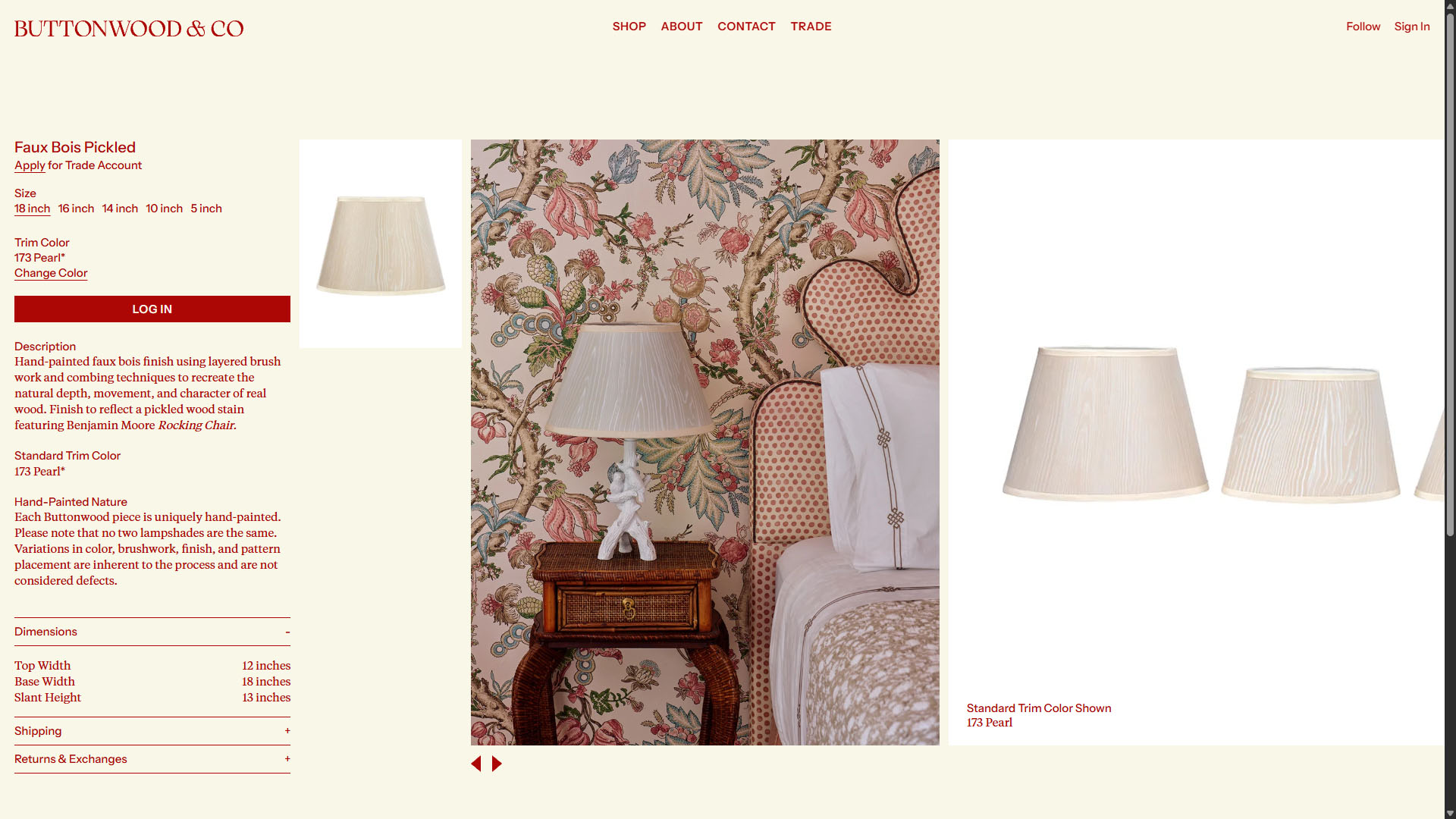
Buttonwood & Co
Shopify Customizations and Custom Theme Development for Trade-Only Home Decor | Palm Beach, FL
- Shopify Customizations and Custom Theme Development
- Trade-Only Shopify Store Gating
- Trade Application and Approval Workflow
- Metaobject and Metafield Product Architecture
- Shipping, Notifications and Store Launch
Shop Iris
Custom WooCommerce Development and Lightspeed POS Integration for a Gift Boutique | Houston, TX
- Boutique E-Commerce Development
- Lightspeed POS Inventory Integration
- Custom WooCommerce Theme Build
- Klaviyo Email Integration
- ShipStation Fulfillment Integration
- Apple Pay and Google Pay Checkout
Cece Bowman Interiors
Custom Shopify Theme Development for Interior Design Client | Palm Beach, FL
- Custom Shopify Theme Development for Interior Designers
- Interior Design Portfolio on Shopify
- One-of-a-Kind Product Pages and Cart
- Per-Piece Shipping and Delivery Profiles
- Structured Data, Mobile Layouts and Store Launch
Custom Shopify and WooCommerce development: common questions
Shopify and WooCommerce. We build custom themes on both, along with the catalog structure, checkout setup and integrations around them. We recommend the platform after we understand how you sell, and we will say so if the one you have in mind is the wrong fit.
Shopify suits most businesses whose main job is selling products. Hosting, security and checkout are handled for you, and a custom theme can still make the store your own. WooCommerce makes sense when the shop is part of a larger WordPress site, when content matters as much as the catalog, or when you need control over something Shopify does not allow. Running costs differ too: Shopify charges a monthly fee, and WooCommerce needs hosting and maintenance.
We are developers. Most projects arrive with designs already done, by the brand’s own designer or by a design studio. If you need design as well, we bring in the creative partner we have built alongside for ten years and run the project as one team, so you are not managing two vendors.
Yes, and it is most of our work. A studio designs, we build, and the studio keeps its client relationship. We can work as a named development partner or behind the scenes, whichever suits the client. The Agencies page explains how handoff, communication and billing work.
Yes. For Buttonwood & Co, a trade-only home décor brand, Chainlink built a Shopify store where pricing and checkout are gated to approved trade customers, with an application and approval workflow built into the store. The same approach works for wholesale accounts, member pricing and any catalog where different customers should see different things.
We plan for it from the start. Products, customers and order history are exported and checked before anything is switched off. Addresses that bring in search traffic are kept where possible and redirected where they change. After launch we check for broken links and missing pages. No developer can promise rankings, but a planned migration avoids the losses that come from skipping these steps.
A custom Shopify storefront typically ranges from $30,000 to $60,000 or more, depending on the number of templates and custom features. A WooCommerce store with a customized theme typically starts in the $20,000 to $35,000 range, and projects with point-of-sale, email and fulfillment integrations generally run from $40,000 to $70,000 or more. Tell us what you sell and what the store has to connect to, and we will give you a written scope and a quote.
Most store builds take 6 to 12 weeks, depending on the size of the catalog, the integrations and the custom functionality. Larger or more technical builds take longer. The timeline is written into the scope before development begins.
You do. The store sits on your own Shopify or hosting account. We build in a development environment and transfer the full theme code to you on final payment.
We maintain the stores we build if you want us to, and most clients do. That covers updates, fixes and new features as the business changes. When you are ready to grow traffic, we also run SEO and Google Ads for the stores we build.
Have a store to build or rebuild?
Tell us what you sell and what the store has to connect to. We will tell you how we would build it, how long it takes and what it costs.